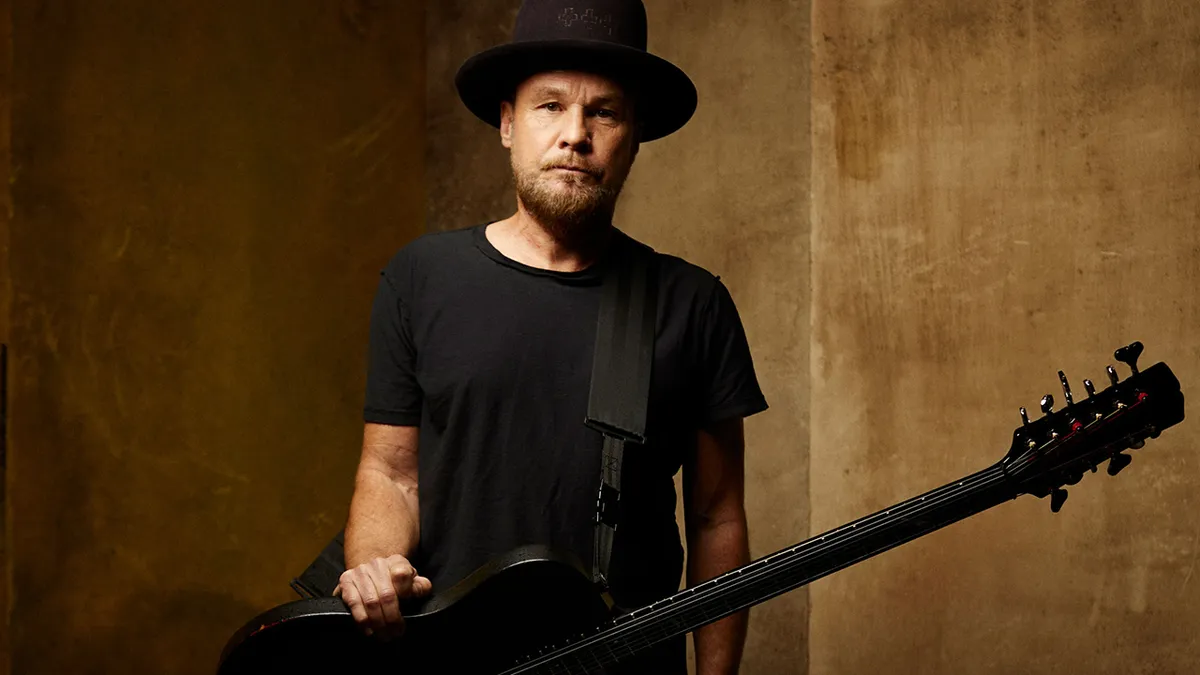
Ben Kenney on the reinvention of Incubus


By Gregory Isola
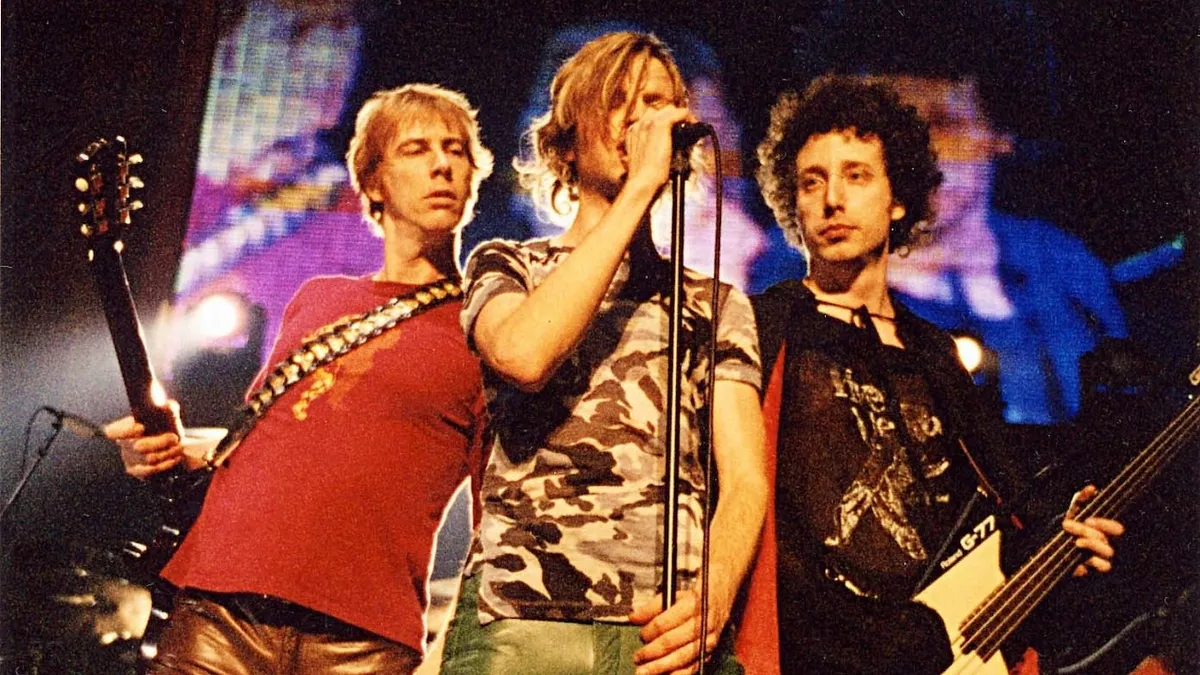
From his days pumping out Philly R&B and New Jersey punk to his three years spent playing guitar with Grammy-winning hip-hop band the Roots, Ben Kenney has never shied away from a musical challenge. Multiple gigs and multiple instruments have given the 27-year-old bass vet an enviable command of an astounding array of musical situations. He first joined the Roots as a sub for Leonard “Hub” Hubbard on 2000’s Area One tour, but he switched over to guitar when Hub returned. On that same tour, Kenney struck up a friendship with the guys from chart-topping rock group Incubus, whom he later joined for their Time Lapse Consortium rock orchestra side project. Still, Ben had some scratching their heads when he was tasked with transitioning from hip-hop guitar to rock bass when he was tapped to join Incubus, replacing founding bassist Dirk Lance.

For Kenney, the transition was no problem. He dove head-first into the band’s music for last summer’s Lollapalooza tour, quickly turning his new-guy status into his greatest asset. “Most of the set featured lines Dirk had written. We had only two new songs at that point,” he recalls. “But these guys have been playing those same songs every day since like 1920. So I started trying to sneak in a riff here or there, because I can’t help being a bit mischievous onstage. I love seeing how much I can get away with before getting the stink-eye.

“Eventually, though, the more I started sticking in my own stuff, the more I found myself later apologizing back in the dressing room. ‘Sorry about that, guys; I guess I got a little carried away.’ But they’d say, ‘Dude, it’s cool. You’re just making it fun.’ So then I really started trying to play things differently each night. That comes from playing with the Roots—we never played the same set twice. I don’t mind playing the same songs night after night, but I do want to be able to take them new places. And if a particular place sucks, you just don’t go back there the next night. Shows are not like records. You try stuff, and it goes out into the air.”

Lots of the “stuff” Kenney tried out onstage made its way onto the latest Incubus opus, A Crow Left of the Murder, a heady collection of radio-friendly rockers brimming with Ben’s best bass work to date.

On the new album’s opening track, “Megalomaniac,” you actually play a lot less than most people would, given the straightforward rock groove.
That’s an avenue I almost always take, at least at first. My initial reaction is to filter just about everything through a Bad Brains context. I’m the hugest Darryl Jenifer fan in the universe, and one thing he’s always able to do is sound huge without playing too many notes. He is actually a very big person physically, but he always sounds like he’s eight feet tall, looming in the background like some kind of bodyguard to the music. It’s an approach that almost always crosses my mind when I’m first coming up with a part or a line. That’s how I picture the role of the bass: as that looming figure safeguarding the music. My priority is sounding big and strong back there, not necessarily playing lots of notes.

Describe the band’s writing process. How and when do your parts enter the mix?
For the vast majority of the songs, Mike [Einziger, guitarist] comes in with a concept, or even a handful of riffs, and a vague vision of the feel he’s after. From that point, each song comes together differently—but most involve us jamming out on Mike’s riffs. Lots of times it becomes a musical game of hide-and-seek, with each of us trying to figure out who is going to be where, and when. Once we each figure out where the others are headed, it becomes a matter of balancing our parts.

In “A Crow Left of the Murder,” for example, Mike’s guitar line is the fire of the track. We call it “poppin’ wheelies,” like when you were a kid, seeing who could hold the wheelie the longest on a bike. Mike was really poppin’ wheelies on that song, and it became too much fun to resist just jumping in there and playing along with him. So I found myself walking a fine line between sticking to my actual bass line and playing out in the yard with the other kids. But with “Megalomaniac,” my instincts told me to lay back and just be supportive.

You make it sound pretty fun.
That was my main goal, really, with all of these new bass parts. I was constantly striving to make them fun, to create a bass line I wouldn’t mind listening to all by itself. I wanted something cool and interesting in each line—nothing boring.

You can’t complain about your place in the mix. You’re all over this record.
When we were composing, we focused on balancing our parts so the vocals, guitar, bass, drums, and DJ effects would all have their defined space. And then we demoed the songs bone-dry, so the balance and blend between the parts—not any effects or production—became critical to each song’s success. Also, when I heard we were going to work with [producer] Brendan O’Brien, I said, “Sweet!” because I’ve never heard a Brendan O’Brien record that made me ask, “Where’s the bass?” In fact, I went home when he was still mixing the record. Usually, musicians like to be at the mixing sessions, trying to sneak their faders up to be sure their parts are heard. But I had absolutely no worries about that kind of thing with Brendan; I knew I was in good hands. Still, when I first heard “Megalomaniac” on the radio, I was kind of scared. You can hear me so good you can see my shoes! [Laughs.]

In both “Talk Show on Mute” and “Beware! Criminal” you consistently begin your phrases on the upbeat.
A lot of that phrasing comes out of playing with Jose [Pasillas, drummer]. He’s like the new Stewart Copeland: He can play any beat forwards, backwards, upside-down, and in between—and still make you nod your head. It is awesome to have a drummer who is always coming at you from a different direction. It’s a treat just to try and run with him.

We have lots of fun trying things backwards, or rhythmically upside-down, putting accents in unexpected places. I was always into the Police, and that Frank Zappa stuff that makes you think they’re gonna drop on the one, but instead they drop on the “and.” And Jose is just killer at that. He’s always tempting me, too. He’ll play something here, and so I’ll stick something in just a little behind that—and all of a sudden the whole groove is leaning in a different direction.

Does it ever lean a bit too far?
Oh, yeah, there have definitely been times when we’re putting together songs and we’ve gone too far off the deep end. We can be having a blast playing something, thinking, This is the best groove in the world! Then we record it and listen back and think, Whoa! That does not feel as good to the ears as it does to the hands!

Who came up with two riffs in “Sick Sad Little World”? They both sound like bass riffs.
Ha! Those were both actually from Mike. It was right after we’d done Lollapalooza, and he was just so caffeinated after those shows. He really likes to play a lot of notes, and to have as much fun as possible when he’s playing, and I love that. It makes me want to run with him. I like to take a riff he’s playing and play it back at him the first time. You have to listen closely, but it’s fun, and Mike really digs it. I think it makes him feel like he can play anything he wants, and know that we’ll make sense out of it. I think lots of his new riffs are the result of this interplay. I don’t want to sound too cocky; I don’t think he came up with those riffs because of me—but I do think we’ve helped each other creatively.

Your playing varies quite a bit, but your tone is pretty consistent from song to song.
The biggest changes usually come just from my right hand. Each song felt like it was coming from a different place, so I really tried to approach each song individually, rather than trying to play “my style” no matter what the song needs. I listen to so much music, and to so many different bass players, and of course there’s a part of me that wants to be like all of them. But sometimes you need to paint as many different things as you can with one brush. My brush is the Lakland Joe Osborn bass [see Gear]; sticking with the one instrument for different kinds of songs makes things more mentally challenging than physically challenging, which I like.

Are you bringing the Joe Osborn on the road?
I am, and I’m considering a Lakland Hollowbody, too; I’m really into hollowbodies. I used to play an Epiphone Jack Casady quite a bit, but it was a handful. The sound is knockout, but good luck with the intonation! You just don’t want a bass that’s in a different mood every time you pick it up. Sometimes that bass liked me, and sometimes it just didn’t.

How about effects onstage? You certainly don’t do much pedal-pushing on the record.
I may bring an octave and a fuzz on tour, but that’s about it. I’m trying to go with as few effects as possible, and I’m definitely getting rid of the wireless. It’s fun to have that freedom, but I think you get a heavier sound with a wire. It’s not insanely heavier, but it’s more reliable, and you don’t have to deal with air traffic controllers coming through your amp [laughs].

I want to keep things as simple as possible up there. There’s nothing worse than having a huge setup with a million pedals go down, and you don’t know what’s not working. That what Mike is for—if you put legs on Mike’s pedalboard, you could seat six for dinner. Of course, he can make any sound known to mankind; he uses everything on there. But I think if we both went down that road, we’d just be asking for disaster. So I’m keeping it simple. Somebody’s got to keep playing when that stuff goes out.

Your strings also set you apart from most rock guys.
Yeah, I’ve been getting into flatwounds; now I have them on all my basses, but I haven’t found a favorite brand yet. Once I started playing the newer basses, especially the Laklands, I realized they have such great sustain that I don’t need the roundwounds anymore. I can get ringing sustain with flatwounds. When that first hit me, it was like a light came down from above! It blew my mind.

I just had some flats left over from sets I was trying out on an electric upright, and I threw ’em on the Joe Osborn. I found I could play anything I’d been playing on roundwounds, and my tone suddenly matched my mental image of bass. James Jamerson just came creepin’ out of the woodwork, and I was sold.

What about amps?
I’ve got a Mesa/Boogie M-Pulse setup, but I’m going to try out their new 750 Big Block. They have this little amp called the Walkabout Scout, and if it were up to me, I would have 30 of those onstage with me! It has the freshest sound; I can play with that thing in my bedroom for hours, doing Pete Townshend windmills and the whole bit. I just love the way it sounds.

The new Big Block is supposed to be just like the Walkabout but with 750 watts—just crazy power and a sweet distortion channel. I still wouldn’t mind having my little Walkabout onstage, though.

You drop more beats in “Pistola,” but this time it’s in the middle of a furious rock groove when straight eighths would have been fine. Do you consciously try to confound expectations?
All of my previous musical experience has led me to the importance of making music that makes you want to nod your head. No matter what the tempo of the track, the bottom half of the music—bass, drums, percussion—must make you feel like moving. That’s why, when I think of bass, I naturally think of Motown. You can break down almost every No. 1 Motown hit ever into about a half-dozen types of songs. There really aren’t that many formulas involved. Beautiful chord progressions, and wonderful performances, but they almost all fall into a few categories. But that’s not what’s important behind their success. The important thing is that every single one of those songs makes you want to move. And that’s what I know the bass can do. So that’s my goal, not what’s expected or unexpected within a certain style.

“Southern Girl” and “Here in My Room” both change things up a bit, but you sound comfortable with such slower material.
Yeah, I love it. That comes from playing lots of R& back in Philly. I’m a big Pino Palladino fan, too. I definitely jock what he does, big-time. I was fortunate to play with a lot of R& groups early on, and even some gospel, where we’d sit on the better half of 70 bpm. It’s a big challenge, but if you play it right, songs at that tempo can really hold your attention, and then they can really explode. So I was trying to dig into that old feel.

In fact, we took “Are You In?” from Morning View [Epic] and completely redid it as a slow groove. It’s at less than 80 bpm—the song now takes like ten minutes to get through—but it’s just so fun to build that much tension. To play that slow, and then to play behind the beat, and then to play only one note every measure—it really becomes all about dropping that one note in exactly the right spot. Nothing else matters besides that one big note; it becomes like bass haiku [laughs]. I’ll give you a couple of notes, and you fill in the blanks—only then will you find the truth!

“Smile Lines” shows you aren’t afraid to stick on the root when it’s necessary. Describe your harmonic approach.
It all depends on my first impression of the riff. If I come up with a riff, I almost always move it up to the V chord right away, just to see what it sounds like. I hear that kind of basic harmony on everything, including things that shouldn’t have harmony! I sing harmony lines along with records all the time, so thinking in harmony feels natural at this point.

You do have to be careful. You can easily lead people out of the circle by playing nothing but harmony on the bass. It can be fun, but it can also be alienating to the listener. Every once in a while, though, it’s cool to imply notes you aren’t actually playing. That phenomenon drove me crazy when I was a kid. I’d really think I knew a bass line, but then I’d sit down and try to play it and realize the bass player was actually playing the 5th below the root, instead of the root note I thought I was hearing. That would really trip me out, but I came to understand how beautiful that power of the bass really is.

How do you imply notes you aren’t playing?
That’s a hard thing to put into words. A lot of it is the relationship between the chords and the bass line. There are moments when the chords are so bold you can sneak in a low fifth and it makes the root sound stronger. A lot of the stuff on A Crow Left of the Murder is like that. It often sounds like Mike and I are playing the same thing but that’s not the case. His playing gives me room to mingle harmonically. So I try to find those places where I can deviate from the root but I also look for where I can leave the rhythm open and suggest more than is actually there. In my world, Robbie Shakespeare, Aston “Familyman” Barrett, and Flabba Holt invented rests. The notes they didn’t play were scarier than the notes they played.

Your playing on “Leech” may sound more like you than anything else on the record.
That was one of the last songs we did before we left for Lollapalooza. Mike had the pre-chorus, the chorus, and the big bridge ending. So we were just noodling, and I came up with the verse riff. It was another one of those “Someday I’m going to grow up and be like Darryl Jenifer” moments. And as we were going back and forth with that riff, the energy just grew and grew. Brandon was right on top of it with vocal ideas, and the whole thing came together quickly.

I even slapped that ending part. I’m not a big slapper—I leave that stuff to others who have dedicated more time to it—but with my trashy distortion all on fire, and the energy of the whole thing, I wanted to get as nasty and aggressive as I could without just stomping on a Big Muff. That’s the only time my thumb came out to play on the record.

I feel like that opening bass part, though, is a real clean expression of me as a player: a few notes left out, a bit of negative space, and a whole bunch of attitude!


Leave a Comment
Name:
Location:
Average Rating :
 

Earl Greyhound Kamara Thomas: On Going All In

Deftones Sergio Vega On Working As A String Section

Expanded Horizons: Sean Hurley On John Mayer And The L.A. Session Scene

Aguilar AG 5J-60 Pickups

Anthony Jackson Gets Down


What does your typical practice routine involve?
 
Subscribe Live Bookmarks Advertise Contact Us Privacy Policy Terms & Conditions


Bass Player is a trademark of New Bay Media, LLC. All material published on www.bassplayer.com is copyrighted @2009 by New Bay Media, LLC. All rights reserved