The Golden Road: Phil Lesh And The Dead Come Together For A Few More Saturday Nights

 
Brian Fox ,May 01, 2009


Phil’s career has been one of countless opportunities. Since co-founding the Grateful Dead with beloved singer/guitarist Jerry Garcia in San Francisco’s swirling psychedelic scene, he’s probably hit more stages and taken more melodic trips than any other man in the business. But that hardly means the clever bass man is “over it.” In fact, as the 69-year-old road warrior sat to chat about his band’s unfinished business, he seems eager as ever to get back to the tour trenches. The reason: Phil’s got two new axes to grind.

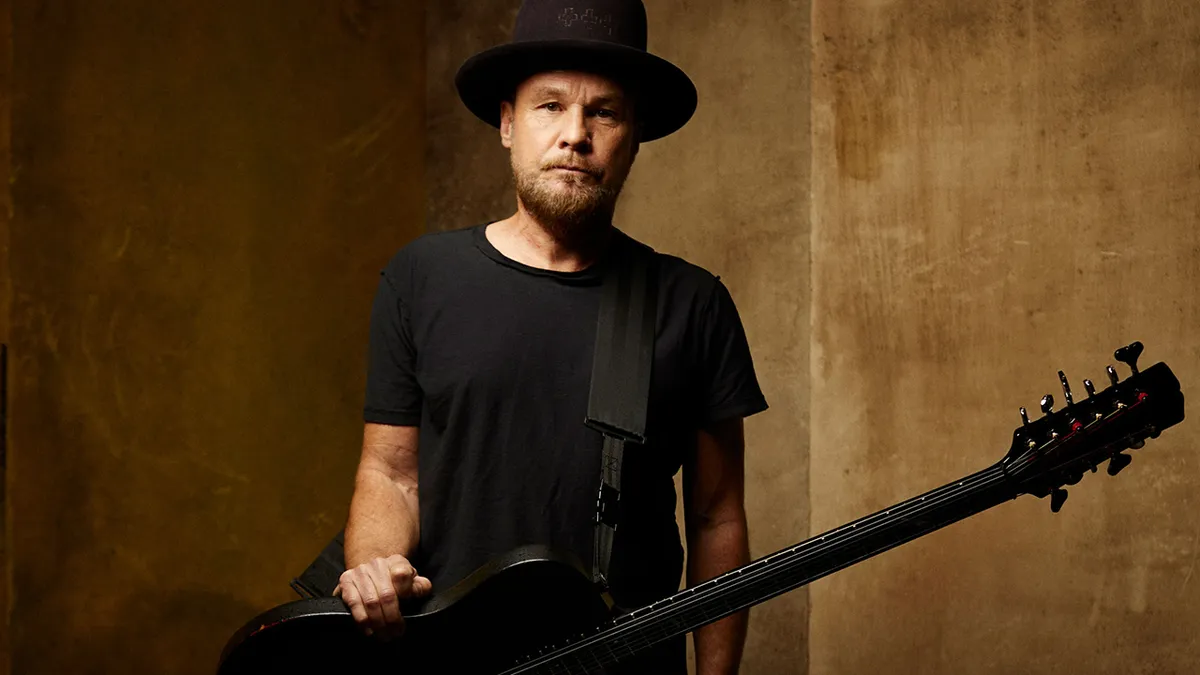
“This instrument is teaching me to play in an entirely different way,” Lesh says of his radical new Ritter bass. “This bass is like a revelation to me. It’s like a Stradivarius—it speaks.” Across the room, a sterling DeMars Guitars Long Trail bass guitar sits by the ready. “I was looking for a semi-acoustic instrument that would be easy to play,” Phil says of the bass. “There are lots of semiacoustic basses out there, but most of them have a deep body. I wanted one I could put my arm around and play.”

After Garcia’s death in 1995, the remaining members of the Grateful Dead have spent most of their time developing solo bands; Lesh’s Phil & Friends have been fan favorites since 2000. In February 2008, Lesh teamed with the Grateful Dead’s Bob Weir and Mickey Hart for the “Deadheads for Obama” concert in support of Barack Obama’s presidential bid. Former bandmate Bill Kreutzmann joined the cause for the “Change Rocks” concert in October, followed by the January 2009 inaugural ball for President Obama. Now the reunited band is taking the music to the people.

With Dead dates through May, Phil will have plenty of chances to explore his new voices. Before beginning rehearsals for the outing, Lesh rapped about the Dead’s tour prep, his new instruments, and the beauty of an empty mind.

Is there much rehearsing to do before you go out with the Dead?

Oh, yes. We’ll have two ten-day rehearsal blocks at Bobby [Weir]’s place here in Marin.

Who all will be going out?

It’s the four surviving members of the band [including guitarist/vocalist Bob Weir and drummers Hart and Kreutzmann], plus Jeff Chimenti from Ratdog on keyboards and Warren Haynes on guitar and backup vocals.

Have you talked about setlists and such?

We talked about focusing on the Grateful Dead classics. The feeling we get is that that’s what people want to hear.

Anything in particular that you’re itching to play?

It’s the whole body of work. Both Bobby and I have been drawing on that material in our own bands for ten years or so—it’ll be more of the same.

Tell us a little about that bass.

It was made by Jens Ritter in a little town outside of Mannheim, Germany. That’s in Hesse, which is actually the part of Germany my ancestors came from. I’m not sure of the trail that led me to his website, but I was just surfing the Web—I wasn’t looking for a new instrument—and I came across some reference to his instruments. I went to his website and was stunned by the look of these instruments. I saw this and just said to myself, that is the coolest-looking instrument I’ve ever seen—I want that! At that point I was just praying that it would sound good. I talked to Jens on the phone, and went down to meet him at last year’s NAMM show. I played a few of his instruments, and I loved their sound and how easy they were to play. So I commissioned two basses from him. The first one has a shiny black finish—I got that back in July—and this second one came just a few weeks ago.

He makes everything from strings to pickups to electronics; it’s a unified concept, and very German in its detail and execution. The work is absolutely first-class. He fixes the neck to the body with ten humongous bolts. It’s a very solid instrument that stays in tune very well, even though it’s made out of wood. [Lesh has a long history playing graphite-necked Modulus 6-strings.]

He set it up so that the string spacing increases as you go from the low strings to the higher strings. That way the distance between the actual edges [rather than cores] of the strings is the same to compensate for each string’s diameter. Also, the tension decreases as you go from the lower to higher strings. So the same effort gives you the same amount of volume on any string. The result is that the tone is absolutely even all the way from the lowest note to the highest note. That’s something I’ve been seeking for years and years.

It’s amazingly easy to play. The strings are beautifully made; they’re the first set of roundwound strings that don’t sound like a piano— in other words, that don’t have the high harmonics that kind of crunch together and end up sounding more percussive than harmonic. Because the strings are so balanced and even, they are amazingly responsive.

There are four coils in the pickup, and the combinations are very flexible, especially when it comes to finding the right settings for any particular room. That’s always a factor for bass, because there are some rooms that simply don’t like the bass—they suck it up or make it bulge.

What’s your method for compensating for that?

I EQ the hell out of it. I’ve developed an ear for identifying the frequencies that stand out, so I roll those off. Generally in arenas, you get down to about 65 cycles per second and it starts to boom. I also have the sound guys working to identify the frequencies that are a problem. They’ll just write them down on a piece of paper and leave them on my amp when I come to soundcheck.

I have three or four EQs in my rack, including a custom Meyer Sound 2-channel equalizer that I use a lot. I’m using Eden cabinets— two 4x10s and two 1x18s—and World Tour WT-800 heads.

What music are you listening to?

I’ve been listening to a lot of Ryan Adams live shows from archive.org. I love Ryan’s music, and he’s played in my band a couple times. It seems like his music has developed in a very interesting direction. He’s jamming out his songs, but in a way that has musical structure, rather than what we do, which is mostly modal, free playing. He’ll improvise a structure and his band will go along with him. It’s really a cool thing. And I’m always listening to classical music and jazz.

Keeping up a jam’s momentum can be a real challenge. How do you keep things on track?

The one thing that annoys me the most— if it can even be described as that—is when a jam goes on too long and there’s no idea that’s predominant over any other that you can sink your teeth into. In my band, I have a talkback mic that allows me to talk to the guys in the band without it going into the front of house. When those stalled moments happen, I get on it and say, “Somebody play something!” I don’t care who it is or what it is. It just has to be different from what’s going on.

It’s tricky, because you have to get away from yourself in order to tune into the music that’s out there waiting to be played. If we can get away from ourselves and our comfort zones, then we can leave ourselves behind and be open to that music that’s out there saying, “Play me, play me!” It’s like the still small voice in spiritual teachings—you have to be able to listen for it. In a way, that needs to be a conscious act, but at the same time, it’s almost a meditation where you’re trying to lose yourself to be open to the voice.

How do you get yourself into the zone to do that well?

It’s all tied to the context of the situation and your emotional state at the time. The best thing you can do is just make yourself blank before you go onstage. That’s what I do. I try to be like a mindless zombie when I walk out onstage. In my band we generally know what we’re going to start with, but sometimes I’ll just call a jam that will lead us into that song. Ideally, in those few moments before we start, everyone’s “laid down all thoughts and surrendered to the void.”

Do you do much playing at home?

I play whenever I can, especially with this new Ritter bass. It’s teaching me how to play it, and I know that it will change my style of playing.

How so?

To answer that, I’d have to define my style of playing, which is something I don’t know if I’m capable of verbalizing. The way it speaks will probably make me play even more melodically than I do now.

Do you prefer to play it fingerstyle or with a pick?

With the string spacing and such, it seems to be designed for playing with a pick. With a pick, I can get more of the higher overtones; that’s one of my primary attractions to this instrument. On the DeMars, I play more with my fingers.

When you’re playing at home, what do you play?

I have a few exercises I go through, and then I just play whatever comes into my little head.

Do you record those jams?

Recording is too much of a hassle. Sometimes when I have a new idea come to me, I’ll write it down in musical notation. And then I just play it until it’s lodged into my head.

What advice can you offer players seeking to make great music?

I can’t overemphasize the importance of playing out with people. You can practice and play to records and become a good player, but you won’t really be able to make music until you play a lot with other people. From June 1965 to the summer of 1967, the Grateful Dead played together every day. We did that as often as we could well into the ’70s, when the pressures of touring and recording forced us to start scheduling rehearsals. But when you have a group that has chemistry, and you play every day, things will happen. Things you never dreamed of.

FROM THE VAULT

In the November ’77 issue of Guitar Player, Lesh relayed the story of how he first met up with Jerry Garcia in 1965 to form the Warlocks, which later changed its name to the Grateful Dead.

“At the time, they weren’t quite to the point of playing out—they were just rehearsing at the local music store. Anyway, I mentioned to Jerry Garcia that I would like to learn the electric bass and maybe join a band. From there, we immediately moved on to a totally different subject. Three weeks later, I came down to hear a gig that they were doing. Jerry sat me down in a corner and said, ‘Now you are going to play bass for the band.’ I said, Okay. He really didn’t know what he was in for!”

RITTER JUPITER 6 EYE OF HORUS

When Jens Ritter first got emails from Phil Lesh commissioning a bass, he thought it was a hoax. So when he called the number and got the jam giant on the phone, he couldn’t believe it. “It was pretty crazy, because I had been listening to his music since I was young,” says the maverick German luthier. “We met at the 2007 NAMM show, and he was so friendly! We talked about the details, and when the bass was finished, I flew it to San Francisco. It was surreal— he freaked out when he saw the bass, then we sat in his garden and talked. Then when we were saying goodbye, he asked me for another bass just like it. It’s unbelievable he appreciates what I am doing so much.”

As for the bass—from Ritter’s Jupiter series—custom touches include Ritter’s 4- coil Quattrobucker pickup and custom electronics. Lesh uses Ritter’s custom spec’d Swordsteel strings, made of steel alloy and manufactured in such a way to eliminate dust and particulates, which can compromise the integrity of the strings. They are designed to have higher tension on the low strings (for punch) and lower tension on the high strings (for clarity), and are gauged Phil requested narrow string spacing for pickstyle playing.

Body Mahogany (one piece)
Neck Limba
Fingerboard Ebony
Electronics Ritter Master parametric PL
Pickup Ritter Master Quattrobucker
Hardware Custom Gotoh tuners, Schaller strap locks, Ritter 3D bridge
Nut Siberian mammoth ivory (at least 10,000 years old!)
Inlay Custom LEDs (front and side) with pure silver Eye of Horus at 12th fret
Strings Ritter Swordsteels (.032, .042, .062, .082, .102, .122.)
Weight 9.9 lbs

THE DEAD COMES ALIVE!

4/12 Greensboro, NC
4/14 Washington, D.C.
4/15 Charlottesville, VA
4/17 Albany, NY
4/18 Worcester, MA
4/19 Worcester, MA
4/21 Buffalo, NY
4/22 Wilkes-Barre, PA
4/24 Uniondale, NY
4/25 Hartford, CT
4/26 East Rutherford, NJ
4/28 East Rutherford, NJ
5/1 Philadelphia, PA
5/2 Philadelphia, PA
5/4 Rosemont, IL
5/5 Rosemont, IL
5/7 Denver, CO
5/9 Inglewood, CA
5/10 Mountain View, CA
5/14 Mountain View, CA
5/16 Quincy, WA

TOUCH OF THE BLUES

Itching to get your jam on? Flash back to April ’08 for a full transcription of Lesh’s lines on “Scarlet Begonias.”

READ YOUR PHIL

In 2005, Lesh released Searching for the Sound: My Life With the Grateful Dead [Little, Brown and Company], an intimate account of those heady Dead days.

SELECT DISCOGRAPHY

With the Grateful Dead Studio: Grateful Dead [1967], Anthem of the Sun [1968], Aoxomoxoa [1969], American Beauty [1970], Workingman’s Dead [1970], Wake of the Flood [1973], From the Mars Hotel [1974], Blues for Allah [1975], Terrapin Station [1977], Shakedown Street [1978], Go to Heaven [1980], In the Dark [1987], Built to Last [1989]; Live: Live/Dead [1969], Grateful Dead (Skull & Roses) [1971], Historic Dead [1971], Europe ’72 [1972], History of the Grateful Dead, Vol. 1 (Bear’s Choice) [1973], Steal Your Face! [1976], Dead Set [1981], Reckoning [1981], Without a Net [1990], Infrared Roses [1991], Fallout From the Phil Zone [1997], Rockin’ the Rhein With the Grateful Dead [2004], Fillmore West 1969 [2005], Truckin’ Up to Buffalo: July 4, 1989 [2005], Live at the Cop Palace: New Years Eve 1976 [2007], Rocking the Cradle: Egypt 1978 [2008], Winterland 1973: The Complete Recordings [2008], Dick’s Picks, Vols. 1–36 [various].With the Other OnesThe Strange Remain [Arista, 1999]. With Phil & Friends Love Will See You Through [1999], There and Back Again [2002], Live at the Warfield [2006].


Leave a Comment
Name:
Location:
Average Rating :
 

The Sony ACID Pro 5 Giveaway

The Audio-Technica Get Heard Giveaway.

The Camel Audio Complete Camel Giveaway

The sE Electronics Microphone Contest

The Image Line Software Make Me Famous Giveaway


Favorite part of Bass Player LIVE?
 
Subscribe Live Bookmarks Advertise Contact Us Privacy Policy Terms & Conditions


Bass Player is a trademark of New Bay Media, LLC. All material published on www.bassplayer.com is copyrighted @2009 by New Bay Media, LLC. All rights reserved