The Hammering Down Heavy Robert Trujillo Grounds Metallica

 
Bill Leigh ,Nov 01, 2008


Five years have passed since Metallica tapped Trujillo to fill the space left vacant after Jason Newsted left in 2001. The choice was both unusual and perfect. Musically, Robert was raised on Motown and Larry Graham— with healthy helpings of Black Sabbath, Rush, and Jaco. After studying at Dick Grove School of Music, he started making his own musical waves in the early ’90s with thrash band Suicidal Tendencies and its funk-metal offshoot, Infectious Grooves, featuring his aggressively funky thumb work. After Suicidal came a sevenyear stretch in Ozzy Osbourne’s band, a stint in Zakk Wylde’s Black Label Society, and close work with Alice In Chains guitarist Jerry Cantrell on his 2002 solo album, Degradation Trip. Still, Robert remained renowned for his strong slap skills and a metal-funk mentality, which might not have been the most attractive resumé bullet points for Metallica. But there’s an absolute heaviness that pervades all of Robert’s playing, and he counterbalances his monster-like stage persona with a studious work ethic and mellow SoCal disposition.

Trujillo joined Metallica at a time of maturation and change for the band, well detailed in the 2004 rock-meets-therapy documentary Some Kind of Monster. That may have made it easier—though certainly not easy—for him to take up the band’s heavy bass mantle. Revolutionary bass shredder Cliff Burton, who died in a 1986 tour-bus accident, looms largest in Metallica lore, and heavy pick player Newsted made his mark with the band for nearly 15 years. How well would a new bassist with an established style fit into such an institution as Metallica? Five years of stadium-smashing crowds suggests the answer is just fine, but the group’s new album proudly screams masterfully. Death Magnetic is an intricate and powerful recording, with Robert’s blossoming bass tones binding the mighty Metallica riffwork, and occasionally launching small but delicious departures. And, in a handful of mid-tempo moments where head-banging meets head-bobbing, Robert’s groove sensibility seems to have had some subtle influence. Make no mistake, though, Death Magnetic is pure metal, and it seems to capture the band at the top of their skills and in a new creative peak. Death Magnetic is likely to be the biggest and most important Metallica album since the 1991 self-titled release, known as the Black Album.

METALLICA HQ IS AN UNREMARKABLE GREY BOX of a building roughly 15 miles north of San Francisco’s Golden Gate Bridge. Inside, the vibe is part rock & roll fantasyland and part serious business. One side of the facility is taken up by fan-club operations, including the management of five Metallica web sites, the production of a magazine, and coordination of the fan club meet-ups the band does before every show. Throughout the corridors, the studio, the tech workshop, and two rehearsal spaces, Metallica memorabilia is everywhere, from classic tour backdrops and props— like the suspended Lady Justice severed head from the Justice For All tour, to an assortment of fancreated banners thrown onstage over the years. You can feel the personal pride, respect for history, and reciprocal fan love, but the organization itself is run as tightly as a drilled-to-death rock riff. It’s the duality of that environment that inspires the band and gives them the freedom to practice, experiment, and constantly sharpen their craft.

In late spring, after tracking for Death Magnetic was complete, Robert revisited the upstairs room at HQ where he slept, practiced, and did much of his “homework” during the album’s intense production sessions. The small dormlike room had a low bunk, a desk with a stereo, and comparatively spartan walls: a family photo, and a color-and-ink Trujillo-era Metallica caricature on the wall, dwarfed by a framed Jaco Pastorius poster. In the corner stood an upright bass. Robert explained: “I started practicing upright when we had time off. A teacher would come by and we’d do the jazz thing, but then we’d end up getting into Led Zeppelin, jamming on ‘Black Dog’ while he was singing and playing guitar. I had been taking piano lessons with my wife, too, but once we got into writing the album, that was it—I couldn’t do it anymore. It’s hard to come in with your homework done if you’ve been up all night working on a bass track.”

You’ve been in the band for five years, but some people probably still see you as the new guy.

Yeah, it’s interesting. Five years is a pretty long time, but when you think of the longevity of this band and the great history with Cliff and Jason, I guess I’ll be the new guy for a very long time. Jason was, but he came into it when he was very young; it was his first big thing. However, the guys really want me to feel like I’ve been there forever. They’ve gone out of their way to make me feel comfortable, even creatively.

Looking back, do you have a sense of how the band changed in response to you joining?

I can’t say, but I do think I joined at the right time. James is probably easier to work with now versus ten years ago, and maybe the same with Lars. Also, when I came into the band there was an interest in reviving and performing the older material. That was a good thing for me because I’m a big fan of [1984’s] Ride the Lightning and [1986’s] Master of Puppets, and it was a wonderful challenge and experience for me to perform those songs. In fact, I got them to perform “Dyer’s Eve,” the last song on [1988’s] … And Justice for All. It’s crazy, it’s fast, and they’d never done it before. Then we did a Master of Puppets 20th anniversary tour in Europe where we played the whole album. Some of those songs had never been performed in their entirety, and “Orion,” which is a really beautiful instrumental, hadn’t been performed at all.

The bass work on that is intense.
Yeah, it’s involved. To me, it’s a work of art. The song has great guitar harmony and melodic sections, but I feel it was Cliff’s bass masterpiece, so it was great for me to be a part of representing it. It was a challenge, but also very fun. I felt fortunate to come in when they were ready to reunite with this material, and that process helped us pave the way for what we’re doing on this new album. There’s definitely an influence from the older material.

Has the bass presence changed in the band?
That’s up to them to say. They say they’re very happy with what we’ve been doing together. Before, though, their heads were in a different place. Jason was involved at a time when things might have been a bit more harsh. I could see James maybe cracking the whip, saying, “Bass is too loud! I don’t wanna hear any bass!”

Lars and I play together more now than he probably ever has with a bassist. He relies so much on James, and I don’t blame him. In a lot of metal bands, it’s the rhythm guitar player who holds down the fort. Even when I was in Suicidal, it was Mike Clark holding it together. The bass player does, too, but usually even he is counting on that rhythm guitarist’s right hand. But Lars and I started getting together a few months ago jamming the new songs without Kirk or James, which was a first. He actually called me up and said, “Let’s rock.” I thought, Cool—Lars wants to be a rhythm section for real. Brad and Timmy in Rage Against The Machine practice together a lot, and it makes sense: When your bass and drums are on, it means everything. Something’s definitely becoming more solid with the bass and drums, and I think it’s just going to intensify in the future.

Do you feel that’s reflected in the new album?
Definitely. For me, though, my main intention with the recordings was to serve the songs, let these guys really develop them, and not interrupt their creative flow. I’d interject when I felt I had something strong to present. I’ve been in three-piece situations where the bass can make more of a statement. With Metallica I’ve got to be more careful about where I make a statement. That has to do with a lot of things, like the solidity of Hetfield’s guitar playing, and the improvisational element in Lars’s drumming. That’s his signature, and as the bass player I want to find my niche but not mess with the others’ signatures. So I did a lot of listening and absorbing the magic of how James and Lars feed off each other and build songs. From there, it was exploring where I could go with my bass lines. Sometimes that meant trying eight different things to see what sounded best and then focusing on one or two. I knew I’d lock into something the better I got to know the songs. And that’s where homework and practice comes into play. If you keep jamming the songs like Lars and I would, stuff just kind of happens. Each song is like a relationship: If it’s meant to be, it finds a way.

On much of Death Magnetic, the bass fits in well with the kick drum and guitars, but still has its own clear, bottom presence.
That’s the trick: Having presence in a band that already has so much presence on other fronts. It’s important for our sound for me to find my niche in the middle of the madness. There’s a frequency where it all works; that’s what we try to capture live, and that’s what we’re trying to achieve with the recordings. Sometimes it’s just in your attack, or how you approach the part physically, and what statement that makes. I hit the strings right on the pickup, which gives my attack some grit. Also, I cut my tracks standing up, which I think helps capture the vibe of playing live. Early on when we were cutting the drums and playing along live, [producer] Rick Rubin suggested we stand up, and we got our best takes that way. After that, I started standing for everything, and most of what I played felt more comfortable that way. That’s something I’d never done in all my years of playing.

There are a few places where you pull out some big slides.
That’s the way I like to use the B string, like you’re a big-ass rhinoceros entering the build- ing. The B has its place—you don’t want to abuse it. You’ve got to find the perfect spot for it.

Are you playing all fingerstyle?
I use a pick when absolutely necessary. When’s that?
If there’s something really fast, I’m not against trying it with a pick. I’ll also try a back-and-forth motion with the middle finger, striking down with the fingertip pad and going back with the nail, so it’s like ta-ka-ta-ka-ta-ka. On fast stuff, I like to try both techniques to see what sounds better. Almost always, though, I’m alternating two or three fingers. That’s more of a comfort zone for me. With Metallica there’s a lot of galloping feel, and for that I use three fingers: ring, middle, then index. Lately, to give my middle finger a break, I’ll switch to my index and ring finger. For example, the descending part in “Ride the Lightning” [from 1984’s Ride the Lightning] is fast and precise: diga-diga-da, diga-diga-da, diga-diga-da. So I play a cycle with my index and ring fingers, and then play the second half with my index and my middle, so I transfer that energy back into the other two fingers. I’ve developed my ring finger a bit more for that purpose, and that’s working out really well.

Do you warm up?
I have to warm up. I start by playing pentatonic patterns with a lot of pull-offs and stuff. I do it standing up now—I didn’t before—so I’m up moving around, getting the blood going. We always jam before going onstage, and in the first few years, I’d go into the jam room before everyone else and go over new songs. Now I strap on the bass a couple hours before, start doing pentatonic scales, and just walk around with the instrument to loosen up. Then an hour or so before, I plug in and get some galloping going so the right hand can get its thing on. But I always have to warm up, especially because we usually open with something intricate or fast, like “Creeping Death.”

In the past when I didn’t warm up, my index finger or forearm would lock up on me. The first night of the Master of Puppets tour, it was really cold outside and I was a bit dehydrated, probably from drinking the night before, which wasn’t a good idea [laughs]. I was pretty scared because that was the first night we were going to play “Orion,” and MTV Europe was filming live. Luckily we travel with a chiropractor who does deep tissue work; he gave me a good solid forearm rub-down between songs. He saved my ass, man. That’s why I started thinking of ways to conserve energy in the fingers.

You’ve got these monster slap chops that you used for years with Suicidal and Infectious, but between Ozzy and Metallica, you haven’t really had the chance to use them.

It’s true! [Laughs.]
Do you miss it?
I do. With Metallica I play pretty hard, and some of my fingering technique is almost borderline slap, but just with the fingers. There’s a lot of fretboard attack and digging in, much the same way as if I were hammering down with the thumb. People tend to think Metallica fans or metal fans are very strict about what they like, so, you know, I’d better not bust out the thumb. “Seinfeld in the house,” that kind of thing. But sometimes I incorporate some slap stuff in a little bass jam I do before “Orion,” and the fans actually dig it.

I wasn’t slapping at all for a while, but in the last year I’ve been reuniting with my thumb and my slap technique, and it feels good. I use it when I’m messing around at home, recording grooves and ideas. The slapping I tend to go for nowadays is on the B and E strings, with a lot of percussive stuff going on. I like to keep it funky but heavy, with the attitude of a metal player hammering down the heavy. I love Larry Graham; I mean I’m an absolute fan. As funky as he is, to me he’s really a heavy player. He’s pure metal. If he wanted to, Larry Graham could play in Metallica.

But I’m not leaning in one direction; I appreciate all styles and players. I have equal respect for people like Geezer Butler, Lemmy, Glenn Hughes, and Roger Glover, but I grew up totally inspired by Stanley Clarke and Jaco and Marcus Miller. I think what Victor Wooten’s doing is fun and exciting. I just think it’s unfair when people compare, saying, “This guy’s better than that guy,” and so on. They’re all great; how could you compare Chuck Rainey to Geddy Lee, or Will Lee to Geezer Butler, or Victor Wooten to Jaco? It shouldn’t be done.

You must be able to count on people comparing you to Jason and Cliff.
Probably. We’re totally different players, though. Cliff was a finger player; he was absolutely amazing for Metallica. His ideas, his presence, and where he was taking the bass and taking metal, were so special. And his stage presence— he was such a physical player. He used to ask Kirk to show him Lynyrd Skynyrd guitar solos so he could play them on bass, and not many bass players were doing that back then. I thought that was so cool. And Jason’s a different player than Cliff. He’s got a great stage presence, and he was a more solid, nuts-and-bolts player for the songs that they were doing, like on the Black Album. Jason gave a lot live. I have nothing but respect for both of them, but I come from a different background. There’s a lot of R&B in the history of what I’ve done and where I came from, and that groove element is going to be there no matter what. I like to play really hard and get pretty physical with my my right hand technique. And then onstage, you are who you are. If the faces I make are something from an exorcist movie, or if I turn into a samurai gorilla monster up there, then so be it [laughs].

How did you initially approach stepping into the role and getting your hands around the catalog?
I had to be like the boy in the bubble and keep distractions away from me. When I was here in San Rafael, I was just doing homework and trying to step up and do the best I could. I wasn’t really in touch with what was going down back home in Southern Cal, and I was really not aware of whatever hoopla might have been going on around the world regarding me being in Metallica. And, you know, I got through. But over the first two years that we toured, I was constantly learning material. When we’d spontaneously jam out on tour, I’d have been working on “Phantom Lord” or some crazy song that they’d thrown at me, then they’d say, “Hey let’s play ‘Metal Militia’ tonight!” Oh, jeez. I had an A-list and B-list of songs, and that wasn’t even on the D-list! Nowadays I feel more relaxed with the madness of it all, though you do have to stay three steps ahead or more with these guys, ’cause you never know what they’re going to throw at you. We’ll get to the final days before a tour and suddenly they’ll want to record something for a tribute album, thinking it’ll only take a day. Three days later, it’s like, Crap, I gotta catch a plane tomorrow!

How do you stay ahead?
If there’s ever a hint of anything that might happen, I get on it as soon as I can, that same day. Say for instance Lemmy’s going to be at some festival in Austria, and they casually mention, “You know, we might want to do such-n-such a song with him. Maybe not, whatever.” No, I learn it that night so that when it happens, I’ll be ready. That’s the world of Metallica, and it’s not just being in the band. Even if you’re a crew member, an engineer, even if you’re working for the fan club or the magazine, it’s just all-encompassing. It sucks you in, you’re working your ass off, and there’s a lot of pride that ends up going into it.

You have quite a disciplined approach to all this.
I have to put a lot of effort into what I do. I don’t just pick up the instrument and then all of a sudden it happens. For coming up with parts, I almost always get my best result by living with the track for a while and trying different things, and I find out what placement works best. Where’s the low B going to sit? How is it going to work with everything else without overstepping any boundaries or messing with the balance of it all? I get pretty analytical, and then when I get it all in my fingers, it’s important for me to have a flow and a vibe all the way through. That’s what I strive for.

How did your earlier gigs prepare you?
It was different, say, in Infectious Grooves, where 80 percent of the songs were written around what I created on the bass, and the other instruments were catering to me. I learned a lot about the lessis- more attitude working with Jerry Cantrell on Degradation Trip. Even if it’s something simple, when the bass does speak, you want to present the statement in the right way, with the right dynamic and feel. Then playing with Ozzy was a learning experience because I had to dissect a lot of what his players were doing. Bob Daisley is an amazing player, but I couldn’t get away with his style in this outfit. You have to find what fits. That’s the challenge and the beauty of it all. That’s what I love about it.

TRUJILLO’S TOOLS

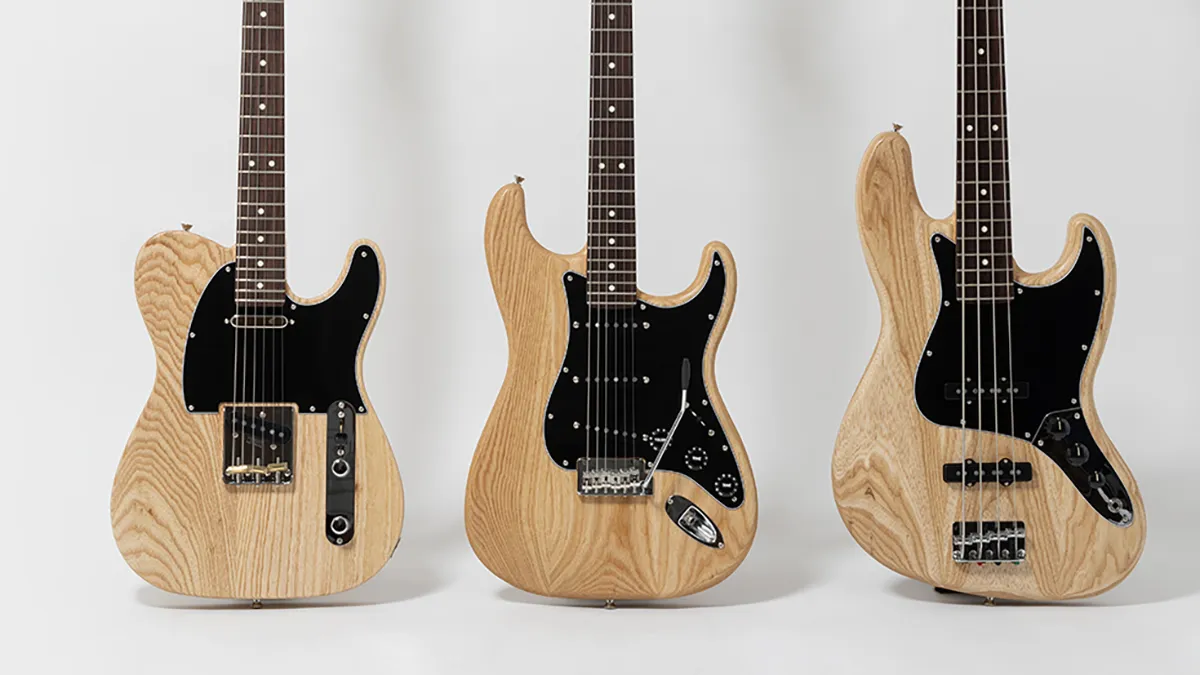
“I’M NOT LIKE SOME GUYS WHO USE JUST ONE BASS,” says Robert Trujillo. “I use many different instruments.” Onstage, Robert’s go-to axes include a trio of new custom Yamahas built by luthier John Gaudesi at Yamaha Artist Services Hollywood. There are numerous custom Fernandes basses— modeled after his favorite old Tobias—which Robert has used since several Tobias builders went to Fernandes after Mike Tobias left California. Then there’s a Japanese- built ESP, plus Robert’s signature Zon Sonus RT. “We love Zon,” he says. “Zons are always gonna be in the mix.”

Metallica’s amps and cabs sit behind a screen at the back of the stage, where bass tech Zach Harmon monitors the racks, switches effects, and keeps the basses ready to go with Robert's signature Dunlop Icon Series string set—four stainless-steel taper-wound strings (.045, .063, .080, .102) plus a non-tapered nickel-plated steel B (.130). Each of Robert’s two racks contains a pair of Ampeg SVT-2PROs and a single Mesa Quad Rectifier guitar head. One SVT-2 powers a pair of MESA 2x10s, another runs two MESA 4x12s, and the remaining two amps are spares. Also in the racks are Furman PL-PRO Power conditioners, a Shure U4 wireless system, Korg DTR-1000 tuner, and two drawers full of pedals, including an Electro-Harmonix Q-Tron, SansAmp Bass Driver DI, Sansamp XXL, and a Boss OC-2 Octave pedal, all powered by the Voodoo Lab Pedal Power and connected through a Voodoo Lab Ground Control Pro. A Ridge Farm Gas Cooker mic preamp serves as the house DI.

After experimenting with numerous instruments and signal chains, Robert’s blue-flame-adorned Fernandes became the favored axe for tracking Death Magnetic, with a recording rig that largely mirrored the live setup. “The fact that I hit pretty hard creates part of my sound,” explains Robert. I use hot EMG pickups, which work well for the attack and presence. I always have both on, with the tone knob usually up mid-way. I like a semi-scooped sound with a little bit of mid to cut through, but I don’t want the mids to overpower the bottom, so I just find that sweet spot. I like the bottom to feel like the heavy bag in boxing. I don’t want the bass to slap you in the face, I want it to punch you in the gut.”

SELECTED DISCOGRAPHY
With Metallica Death Magnetic [Warner Bros., 2008]. With Jerry Cantrell Degradation Trip [Roadrunner, 2002]. With Ozzy Osbourne Down to Earth [Sony, 2001]. With Suicidal Tendencies Lights … Camera … Revolution! [Epic, 1990]; The Art of Rebellion [Epic, 1992]. With Infectious Grooves The Plague That Makes Your Booty Move … It’s the Infectious Grooves [Epic, 1991].


Leave a Comment
Name:
Location:
Average Rating :
 

The Sony ACID Pro 5 Giveaway

The Audio-Technica Get Heard Giveaway.

The Camel Audio Complete Camel Giveaway

The sE Electronics Microphone Contest

The Image Line Software Make Me Famous Giveaway


Favorite part of Bass Player LIVE?
 
Subscribe Live Bookmarks Advertise Contact Us Privacy Policy Terms & Conditions


Bass Player is a trademark of New Bay Media, LLC. All material published on www.bassplayer.com is copyrighted @2009 by New Bay Media, LLC. All rights reserved