Two-and-a-half decades before, Rocker helped ignite a rockabilly revival with the Stray Cats on hits like “Stray Cat Strut,” “Rock This Town,” and “(She’s) Sexy + 17.” The trio’s stripped-down, punky take on rockabilly sprayed gravel all over early-’80s synth-driven pop charts and paved a dragstrip for hardcore rockabilly purists and psychobilly lunatics alike.
Having just completed the Stray Cats’ first U.S. tour in 15 years, Lee is ready to hit the road. His stacked-up pompadour may be gone, but the roots-rock/rockabilly zeal continues to deepen. “I’ve been writing more for each record, and I wrote the bulk of this one,” says Rocker, who worked on the disc for several months in-between tours. “Rather that just blowing through a record in 30 days, I like having the perspective of leaving for a tour and coming back to write more.” Indeed, with classic two-feel slap lines, jazzy walking, and a wild solo closing track, his supercharged playing shows more variety and substance than ever.
Your music is often described as rockabilly, but your work outside of the Stray Cats draws on blues, country, folk, and rock. What influences do you have outside of rockabilly?
Of course, I am a rockabilly player to a degree, but I try to look deeper into the background of what made rockabilly in the first place. What were the original rockabilly players of the ’50s listening to? What inspired their songwriting and playing? They learned from jazz, which was popular at the time, and musicians like Willie Dixon, who wrote and played their own songs.
In a way, the player that influenced me most was Ray Brown, one of the great walking bass players. I spent a lot of time as a teenager working on his book [Ray Brown’s Bass Method, Hal Leonard] with my teacher. We analyzed his lines and studied how his walking lines winded through chords. Unless you take lessons and learn theory, you can end up being limited as a musician. You can be a lot more than a one-dimensional player.
Where do your bass lines fit in your writing process?
I like to cut bass last so that I can go back and play something that responds to the song’s accents, or to find something that plays against the other guys. I like to be a thread that winds through the song. One of the luxuries of leading your own band is that you can go last if you want to [laughs]. That didn’t happen with the Stray Cats, but it has on my solo records.
How have you developed between your last record and Black Cat Bone?
There are different voices on this one. Much of the music is rooted in rockabilly, but it’s not a rockabilly record. Most of the songs are not straight I–IV–V progressions, because I like to have a left turn in there somewhere. There are a few slap songs that are in two, there are walking songs, and there are songs that are me trying to draw different sounds out of the bass. One of the new songs, “Rebel,” has a dotted feel that I’d never played before. I have to sing against it, so I’m going to have to work on that.
Is it challenging to sing and play upright bass live?
Yes, but it’s gotten easier over the years. In some ways it’s like a piano player getting their left and right hands working together—there’s coordination involved—and once I got over the hump, it got easier. Playing upright and singing are both very physical acts, so sometimes you feel pretty worked after a set!
How do you manage to play at such loud stage volumes without feedback?
I have an EMG magnetic pickup embedded in the end of the fingerboard and the King transducer under the fingerboard for the slap sound. I run the EMG into one channel of the amp and the transducer into the second channel, and I balance the two pickups at the amp. I scoop out all of the EMG’s mids, set bass around 7, and treble at 4 or 5. I take out all of the transducer’s lows so that it’s just the click. It’s not a pleasant sound by itself, but it’s great with the magnetic pickup. By not running any lows through the transducer, I don’t get any feedback or low-end rumble. I think using steel strings and this kind of pickup system eliminates all of the problems that upright bass players have playing at loud volumes.
Live, I mic the amp and prefer the soundman to use my amp’s sound. They usually want to take a DI off the pickups, but I don’t like to let them, because then the soundman is deciding what my sound is, not me.
What advice do you have for upright slap players?
Many slap bass players worry too much about their right-hand technique, when they should focus more on note choice and tone. You see some players with incredibly fast right hands clicking and clacking through a song, but you have to find where to step out, like between a lyric or a turnaround, instead of plowing through. Do something that stands out when it matters, because if you’re constantly busy, it never has the effect that you want it to have.
As long as you have calluses, it shouldn’t hurt to play upright. You have to stay relaxed; otherwise you’re fighting something, and you’re liable to end up with carpal tunnel or tennis elbow.
Which players make you want to pick up your bass and play?
I don’t sound like him, but Willie Dixon has always been an inspiration. He played, wrote songs, produced, sang—he did it all. He’s a great slap player. I also love Bill Black’s playing with Elvis. Yet, I was never someone who would learn parts note-for-note. My favorite songwriters and bass players are the ones who have their own voice and sound that you can recognize immediately. I like when I can tell it’s Paul McCartney or Nick Lowe just by listening to the bass. By not taking too much from another player, you can develop your own quirks and way of doing things.
Thinking Of Playing Upright?
Lee Rocker’s Advice For Aspiring Electric Converts
“The best way to start playing upright is to start off on electric. That way, the bass’s sound is already in your head, and it’s a matter of transferring what you’re doing horizontally to playing vertically. Get an upright bass, make sure it’s set up so the action isn’t too high or low, and put some gaffer tape on the fingerboard at the 3rd, 5th, and 7th positions to help you learn the positions. Start playing scales on the G string to get the feel under your fingers. Once you feel comfortable, try transferring your electric bass lines to the upright. You’ll probably find that you have to simplify the lines somewhat and choose what is essential about them.”
Can Be Heard On
Lee Rocker, Black Cat Bone [Alligator, 2007]
Stray Cats, Rumble in Brixton [Surfdog, 2004]
Can Be Seen On
Stray Cats, Rumble on Brixton DVD [Surfdog, 2004]
Rockabilly Slap Bass With Lee Rocker [Homespun]
Gear
Basses:
King Doublebass Lee Rocker Cat Bass, Lee Rocker Signature Slap King, and Lee Rocker Silver Sparkle, all with Jargar Dolce strings and King’s magnetic/transducer pickup system
Rig:
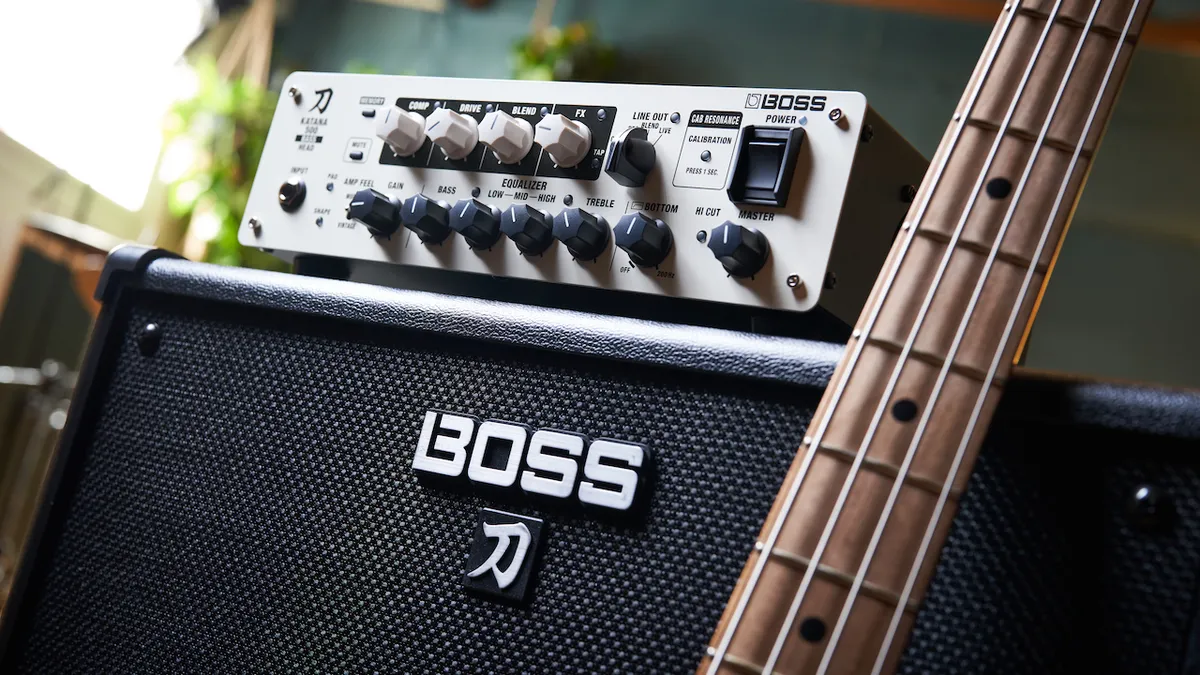
Ampeg PortaBass PB-800 head and SVT-610HLF 6x10 cabinet
“I record four tracks of bass for each song. I use a large-diaphragm mic over the ƒ-hole, usually a ’60s Sony powered mic, and then I mic the Ampeg 6x10 cabinet and take a DI off each of my two pickups. The mixes are usually about 95 percent body mic, but if I want a little more hair or distortion, we’ll add some pickup sound. I always put on new strings before a session.”