Talking to Mike Watt is a unique experience. With a combination of middle-aged wisdom and the excitability and attention span of a teenager, he punctuates his road stories and sage music-industry observations with belly laughs and mile- a-minute rants on nothing in particular. A linear train of thought is anathema to him; his ideas carom off each other like a 3-D pinball game, complete with flashing lights and sound effects. Five minutes into our interview, I knew this wouldn't be your typical BASS PLAYER story.
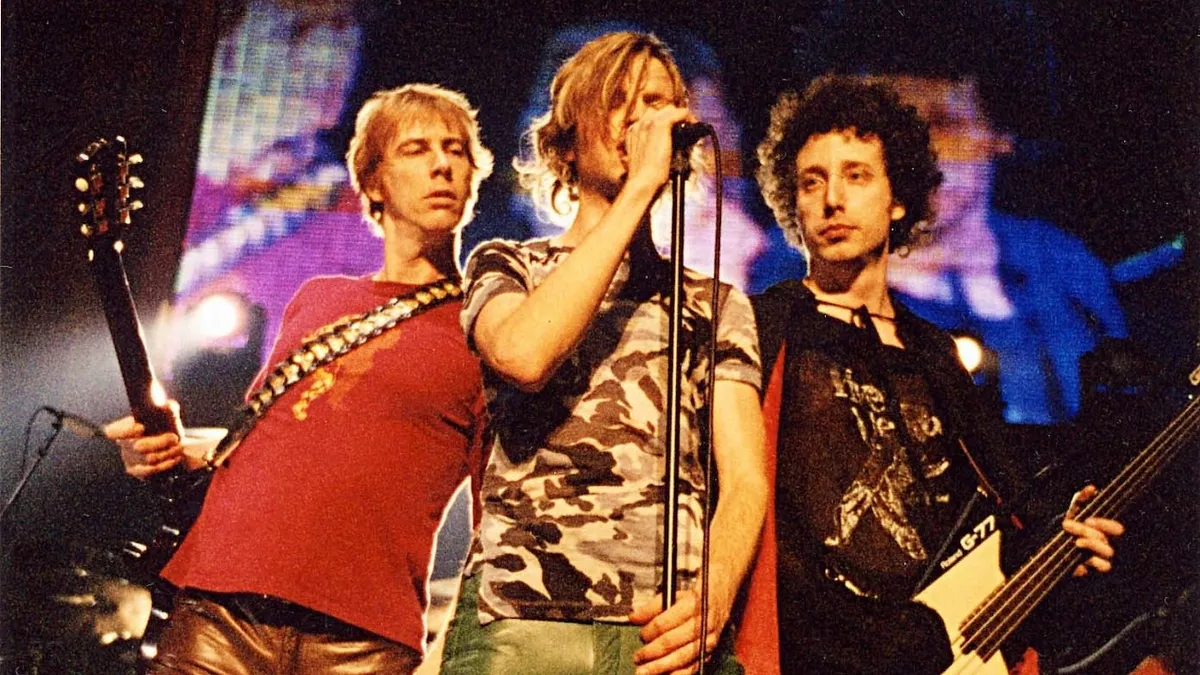
Despite being anything but a household word, Watt is a dyed- in-the-wool legend to many. The Virginia-born 37-year-old grew out of Southern California's late-'70s punk-rock scene, co- founding the seminal post-punk outfit the Minutemen with guitarist and close friend D. Boon and drummer George Hurley. The band pounded out an extraordinary number of terse, frantic tunes with heavy political themes laced with elements of jazz and funk. In 1985, D. Boon died in a car crash, devastating Watt. As part of a slow and painful healing, he and Hurley joined guitarist Ed Crawford, and fIREHOSE was born. Watt toured with the band almost constantly, taking time out to record two bass-duet albums, Dos and Numero Dos, with ex-Black Flag bassist Kira Roessler, to whom he was once married. His skillfully composed bass lines have earned him many admirers, who, in turn, have rediscovered the Minutemen. And the Red Hot Chili Peppers--who have been friends with the bassist since their first gigs together in the early '80s--dedicated their mega-selling 1991 disc Blood Sugar Sex Magik [Warner Bros.] to Watt. "He's amazing-- innovative, beautiful, melodic, and hardcore, all at the same time," said Flea in his Jan/Feb '92 BASS PLAYER cover story. "He can also play the simplest thing in the world and imply that he can play anything. He's one of the greatest bass players ever."
Late last year, fIREHOSE decided to call it quits. "It got kind of cruise-control," says Mike, "and I had never been in that situation before. Music was always very vital to me." Undaunted, Watt put together Ball-Hog or Tugboat?, an ambitious 17-song project with nearly 50 alternative-music guests, including such heavies as Flea, Pearl Jam's Eddie Vedder, and Nirvana's Krist Novaselic and Dave Grohl. Described by one writer as a "publicist's wet dream," Ball-Hog has been almost universally lauded by fans and critics alike. Its concept is simple yet profound: instead of recording a traditional solo album, Watt decided to make a "wrestling record." "I just wanted people to get in the ring with Watt," says the bassist, in his characteristic third-person voice. "One other reason I called it a wrestling record was for the players. I didn't want them to think it was a big battle of the chops; it was more like a bunch of kids in the garage, or like germs in a Petri dish. It wasn't the idea of who was going to kick whose ass--it was more like different personalities just bouncing off each other."
Clearly, Watt likes to deal with the press in a similar manner. While some players prefer to step through topics in a guided and systematic nature, Watt specializes in the "spiel" (as he calls it), where any topic is fair game, at any time. Rather than trying to direct the conversation--or even to get a word in edgewise--I just turned on the tape recorder and let him go.
THE WRESTLING CONCEPT
After the last fIREHOSE gig I was thinking, Well, what now? What would be really different for me? The idea of a "bass solo record" seemed kind of anal--like some kind of fusion instructional video--and besides, rock & roll is so much a guitarist/singer thing that to make a "bass solo" rock & roll record seems strange. I invented the wrestling-record idea so people wouldn't know what to expect. It's the same reason why I say I'm a punk bassist: so people won't call me a reggae player or a ska player. I'm free to define myself. People wonder why I call myself a punk--a punk is someone who gets fucked in jail for cigarettes! But if you're a punk, you can play anything you want.
I was really scared to do this record at first. I've done all my music in bands, and this was the first time I did something without a real band. But I believe in the bass so much that I figured, If I have my parts down--the foundation, in a trippy way--it would all work.
RECORDING BALL-HOG
I made the record in two days in Seattle, eight days in L.A., and two days in New York. For the Seattle and New York sessions, there were no rehearsals; I just played the bass lick I had written, or I gave the other musicians a cassette of my little version. At least half of the people heard the lick for the first time on the spot--especially the Seattle players. That's why I used only one- and two-chord songs when I went up there--so I wouldn't have to waste a lot of time!
Basically, I just laid out the bass line and went through it a few times, and then we went for it. Most of the time I played with the drummer and a midrange instrument--either a horn or a guitar--and I was there in the room with the drummer. I didn't even know some of these guys; once the record started to get a life of its own, some of them, like John Molo from Bruce Hornsby & the Range, were calling me and asking if they could be on it. John's an older, bald guy, but he was playing like a teenager--hollerin' while we were playing! So I gave him a drum solo. Later, he told me he wanted to do a wrestling record of his own.
MARKETABILITY
When this record was done, I noticed that it sounded like 17 different bands and one bass player who wouldn't get off the stage! But 99% of the time, I don't think about whether a record is marketable; I've got to make it interesting for myself. That's one thing I liked about punk: our audience was always little, so we were always making music pretty much for ourselves and our friends. In a way, I haven't gotten away from that. I'm not nostalgic about the old days, but we did get some ethics going that really aren't obsolete: the idea of keeping control and not just going into the studio to be a hand puppet of the label. It seems a lot more honest that way--more to the point and less frustrating. And when you screw up, you have only yourself to blame, instead of this big, monolithic entity, which is an easy target. I don't see why people aren't more paranoid to protect themselves from labels in the first place.
I know it sounds like a big bunch of shit when Watt says, "Yeah, well, I had this wrestling-record idea, so why can't other people do the same thing?" True, I've never had to make a demo for a label in my life, and I know that a kid could never knock on the door of a big label and say, "Hey, I've got these ideas." You do have to pay some weird kind of dues. But you have to build your own sense of clout, on your own terms. That might mean hooking up with a little label and making your own record, to show you can do it. You have to be unafraid. But in order to put yourself in that position, you can't be in a lot of debt. That's why I keep control over my projects, and I keep them little. You need leverage--big time--because most people in this business don't do things for you just to be nice.
If you get a record deal and want to be in it for the long haul, you need to take account of the money you're making and spending. That's just as important as protecting your bass parts in songs. There's a 90% failure rate of bands signed to labels, and someone told me that's why there's still a $3 overhead on CDs--to pay for all those bands that don't make it. So when you're on the road, you might be making $250 for a gig, but there's a $350-per-day tour bus out there with a $150-per-day driver--and that's not including the gas. Sure, the label's paying for it this year, but in the end, you're paying for it. So if you don't watch yourself, you might come home with just memories.
THE PUNK-BASS LEGACY
Where I come from, bass was always where you put the lame guy--but nowadays, a lot of kids decide this is what they want to play right off the bat, because they like it. Punk in general helped to get kids interested in becoming musicians, because everybody was lame: if you were in the audience, you were as good as the guitar player. But if you listen to a lot of those old records, the guitar is almost just a texture, with the bass driving everything.
I'm sure back in the '60s a lot of people thought of the bass as a kind of toy, almost like a kazoo. We had to fight and earn the bass some respect, but it's come around--and it's still coming around, more and more. On the other hand, there's something cool about people not really knowing what we do: we're left free to define ourselves.
KICK DRUMS
I was talking with Georgie [Hurley] once about the kick drum, because that's my note, and he surprised me by saying, "Man, the kick drum is just something I put in between everything else." Imagine people thinking that about the bass guitar!
An older musician once told me that years ago, they'd always tune the kick drum to the key of the song. Toward the end of fIREHOSE, Georgie got a Roland electronic drum unit where you could tune the kick, and when I started playing in the same key as the kick drum, you wouldn't believe how tight-sounding it became all of a sudden. I'd like to investigate that some more.
THE STRING THING
It takes a lot of colors to make a rainbow. There are guys who play 7-string basses, there are guys who play 3-string basses, and I even met someone once who plays a 1-string. That's intense. I think for every 7-string bass they should make a 1- string! I love the idea of people stretching the stereotype--to me, the more of that, the better--but the problem is that with some of those higher notes, you don't feel the bass as much. They actually make the bass sound more like a piano, which is weird. Necks made of really good woods or graphite can eliminate dead spots, but in doing so they make the bass sound more midrangey and piano-like.
Another thing about 6-strings is that they force you to play in position more, so you don't play as many open strings. The way our machine is set up, there isn't a button for every note--you have to put in certain nuances, such as whether to play an open string or a fretted string, or whether to play with your fingers or with a pick. I'm always thinking like a union man-- protecting our jobs as bass players--and fortunately, they'll never be able to clone those nuances on keyboards.
I don't know how people can play those 6- and 7-strings standing up. I play with my left-hand thumb a lot, and I can't even wrap my hand around one of those wide-o necks. I once had to play [Fishbone's] Norwood Fisher's 5-string, and I couldn't do it, even after he'd taken off the B string for me-- although that was probably incompetence on my part. I guess there's something neat about that B string, if you're in a little club and people can actually hear it.
THE MADONNABES
You know how bass is--if you don't play with a drummer for a while, you just lose it. You play too soft. So last year, to stay in practice, I got together with these two guys each morning, and we'd play Madonna songs. We called ourselves the Madonnabes. I used a [semihollow] Gibson Les Paul Signature bass; it's acoustic, so you can feed back with it, which is righteous. I don't use feedback for going over the top, like Hendrix--I just use it for sustain and for swells. I even got Les Paul to sign that bass; he was playing in a little club in Torrance, and I brought him the bass during soundcheck. He wrote on it, "Keep on pickin'"--and I can't play with a pick, so I guess the joke is on me!
BASS COMPADRES
Flea, Les Claypool, and I have this idea of doing a project where we'd interpret all of ZZ Top's Tres Hombres [Warner Bros.] on three basses. There would probably be a lot of hype built around it, but we'd like it just to come out. That's one of the reasons why I did this wrestling record. A lot of people think it's like The Gong Show, but I just wanted it to come out of left field, so there wouldn't be all this hype. That's one thing I told the people at the label: You can't foul this; it's a personal project, and it should be treated with respect. I considered using fake wrestling names, like "Seattle Crusher," but then nobody would know who someone like [violist] Spot is. Some of these guys will never get to make another Columbia record, and in a way I don't think Columbia will ever get to make a record like this again.
DOS
We just finished our third Dos album, Justamente Tres, which has 17 songs on it. When we were recording, I got a Danelectro Long Horn bass; one of the tuners was broken, so it was missing the D string. That's the string I always break at gigs anyway, so I just left the bass as a 3-string. That's why we called the record "Only Three."
The thing I liked immediately about Dos was that I could write all kinds of songs for Kira, and they ended up being good ammunition for projects like fIREHOSE and the wrestling record. When dudes have to deal with songs written for basses, they really have to reach; it's not like I'm laying out some George Thorogood blues thing. They have to go on a little journey with me.
PUNK ROOTS
I miss a lot of the chaos of the old days. Back then, you never knew what the next band was going to sound like. Almost anything went, and it wasn't about haircuts or guitar styles.
I first tried music when I was 12; the teacher gave me a clarinet, although I wanted a sax. After ten weeks, he said, "Watt, you try hard, but you just ain't got it." So I gave up on music. About six months later, I started hanging out with D. Boon in the San Pedro projects, and his mom wanted to get us to start playing music--probably just to keep us off the streets. So after school, we'd go to his place and try to figure out parts off records--Creedence, stuff like that--using his guitar. Basically, if the band was easy enough to copy off the record, we liked 'em!
One day we were looking at album jackets and noticed there were bass guitars on the records. So D. Boon's mom told me I should play bass guitar. We didn't really know that basses had heavier strings; we thought they were just 4-string guitars--so I played a guitar with four strings until high school.
My first bass was a Kay, which I bought for a hundred bucks. There was a problem with learning to play off records, though, because I couldn't hear the bass--even on stuff like [Deep Purple's] "Smoke on the Water." That's why John Entwistle and [Black Sabbath's] Geezer Butler had big influences on me: they were the first guys I could actually hear.
We graduated in '76, and in '78 we started a band called the Reactionaries. Before that, we never wrote our own material. That was the Pedro culture--the best guy in Pedro was the one who could play [Led Zeppelin's] "Black Dog" the best. That's what intrigued us about the punk rockers: these guys could barely play, but they were trying their own songs, and they were playing shows.
PEDRO PARTIES
The only gigs we could play were keggers in people's backyards, where you'd play [Ted Nugent's] "Great White Buffalo" or something for 20 minutes. We also played a couple city-sponsored gigs out on the jetty. We'd be playing Black Sabbath and Alice Cooper songs, and people would throw so much shit at us. See, we didn't know we were supposed to tune with each other. We thought it was a question of personal taste: "I like my strings tight," "I like mine loose." I can imagine what it sounded like! And the singer would be doing this Alice Cooper/Kiss act, bleeding out of the mouth and everything.
We saw our first shows at the Whiskey in Hollywood around the end of '76: Talking Heads, the Germs. I noticed a lot of the songs were built on the bass, and often the bass player was as good as the other players--and that was a revelation. The first thing we said when we saw bands like that was, "We can do this."
RISE OF THE MINUTEMEN
By the time we got the Minutemen going, hardcore was already on the scene, so the audiences were very conservative--little kids spitting on you and stuff. In those days we'd make a record every six months, because our records were like our flyers. We didn't tour to promote records--we made records to promote our tours. And some of those records were incredibly cheap to make: we made Buzz or Howl Under the Influence of Heat for $50, live to 2-track, and we made our best record, Double Nickels on the Dime, for $1,100. For that one, we mixed 45 songs in one night.
In a way, the fact that Pedro was culturally redneck helped me, because it was like being in a Thermos bottle. I'd see bands move to Hollywood, and suddenly they couldn't write songs anymore. There's something about real-life experience that helps you in terms of coming up with ideas. Sometimes it's good to be up against the wall, where you need to make the most out of what you have.
fIREHOSE
D. Boon was killed on December 22, 1985. At that time I didn't know you had to pay to have your phone number unlisted, and this kid from Ohio, Ed Crawford, called me up a couple of times. Then he came to my house, and he ended up living under my desk for nine months. We played together for about a month and a half, and then I showed him to Georgie. We practiced songs for a month, and then we made our first record--after being together just two-and-a-half months. All told, we played about 800 gigs and made six records.
VITALOGY
In 20 years, I want to be a guy like Ray Brown or [jazz drummer] Max Roach. They're vital. I saw Ray playing with this guy, Benny Green, who's like an Yngwie Malmsteen on piano. Every piano note was really loud and fast--but here was Ray Brown, steering the boat, and hollerin' while he was playing! All this on standup bass, which is so physically challenging. I got an upright last year, along with a Ray Brown book--and man, the strength that's required is incredible. When I play that thing, I'm a hurtin' little boy; I feel as though I just started playing. To be Ray's age and still play that upright--that's what I'm looking at.
I like a lot of things going for me on the bass: I like Dos, I like the wrestling record, and I like trying to play the upright. But I never want to say I outgrew or evolved past punk bass; it's a set of tools I use to keep present. There's just so much to do with the bass, and since you're like glue, people need you. You need them, too, because if you're not sticking stuff together, you're kind of a puddle. And even the strongest epoxy is just a very hard puddle.