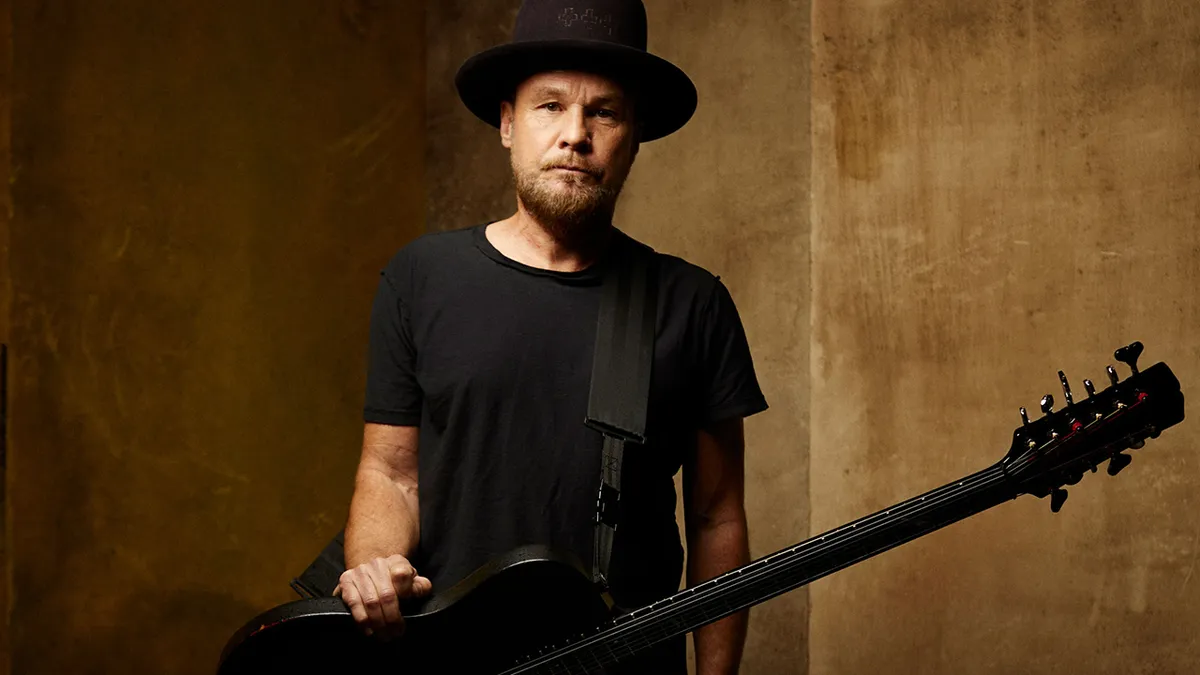
Paul Simonon

 
Bill Leigh, Jonathan Herrera & Greg Olwell


As a player, Paul Simonon was much more than the iconic, out-of-focus figure smashing his bass on the cover of London Calling. Over the course of five albums with the Clash, Simonon created some of the catchiest and most distinctive bass lines of the ’70s and ’80s, growing from an absolute beginner to a formidable player in the process. He blended fierce pickstyle rock and fat fingerstyle dub into the Clash’s sound, while using his skills as a painter and artist to define the band’s rebel look and hip vibe. By the time the Clash imploded after 1983’s chart-topping Combat Rock, Simonon had forever changed punk-rock by funneling hip-hop, disco, rockabilly, and reggae bass lines into the band’s sound. The world had never seen anything like the Clash’s blend of music, energy, and politics—and with the Clash’s induction into the Rock & Roll Hall of Fame in March, the spotlight is again on Simonon and the Clash’s lasting effect on rock.

Before meeting future Clash guitarist Mick Jones at an audition, Simonon studied painting at London’s Art College. Once Jones convinced Simonon to play music, Paul quickly realized that being onstage was far more attractive than sitting in a room with a canvas and brushes. After a few lessons from Mick, the two started playing together before recruiting singer/guitarist Joe Strummer and a revolving door of drummers. “When Joe showed up to the first practice, he was a bit surprised to find that I’d been playing for only a few months,” says Paul. “But he said my enthusiasm and the way I threw the bass around encouraged him to believe it was going to be fine. Then a couple of months down the line, we did our first show in Sheffield supporting the Sex Pistols.”

Now retired from music, the 47-year-old Simonon has returned to his artistic roots, preferring the challenge of painting London cityscapes over laying down hip-shaking bass lines. Joe Strummer died in December, halting hopes of a Clash reunion—but Simonon remains active and proud of the band’s legacy. He worked with Strummer and Jones last fall compiling The Essential Clash CDs and DVD before appearing with Jones and drummer Terry Chimes at the Rock & Roll Hall of Fame induction ceremony.

“I like heavier basses because they feel more like a weapon”

Did you come up with Clash bass lines on your own?
Usually—Mick or Joe would come in with an idea for a song or they would work on songs together. Often I ended up as the filtering system, but with their powerful songwriting, it was 90 percent Mick and Joe. It was definitely like that in the beginning because I was still learning my craft, but later I got more capable and came up with my own stuff—that started about the middle of our second album, Give ’Em Enough Rope.

Your tone changed significantly around that time, too.
Roundabout the time of The Clash I got a Rickenbacker, but I didn’t like it—the sound was too thin and I tended to throw it around. Then I got a Fender Precision and that felt right, but Jesus Christ, it weighed a ton. I used whatever I could get hold of to cushion the strap, because after running and jumping around the stage for an hour I’d have serious burns on my shoulder.

For recording Give ’Em Enough Rope I used a Wal because the producer, Sandy Pearlman, suggested it. The only thing that put me off about it was there were so many switches, and with all the sweat from jumping and running you’ve got more chance of things getting jammed up. The Precision Bass is much more of a workhorse—it’s solid and I could throw it around and it would still be fine, or I could chop up the stage with it. I like heavier basses because they seem to have more resonance and feel more like a weapon.

I used to rough up my basses a bit and personalize them so they had some individuality. And I figured nobody would want to nick a bass that had been bashed up. But maybe that’s slightly different these days—maybe I could do a business of smashing them up and sending them to Japan. I’d be rich! [Laughs.]

Aren’t you smashing one of your favorite basses on the London Calling cover?
I’ve heard so many stories about that—I think people started making stuff up after a while. The story is, in England we were used to the audience being allowed to stand up and dance when we played. We were playing at the Palladium in New York, and the combination of nobody being allowed to stand up and the bad sound worked me up to such a point that I lost control for a moment and started smashing the bass. If I’d considered it a bit longer, maybe I would have done it to the spare bass, but I did it to the good one! So for the rest of the tour, I had to suffer a pale imitation of the one that got smashed. Eventually I got a nice, weighty one back. I remember coming off stage and I noticed Joe had a large piece of it, and it looked like he was about to walk off with it. I reached over and said, “I think that belongs to me.” [Laughs.]
Is that smashed bass the one hanging in the Rock & Roll Hall of Fame?
Yeah, they called and asked if there was anything they could borrow, and I sent it to them. If it wasn’t there, it would just be in a case in my house.

How did you learn to play bass?
In the beginning Mick was teaching me guitar, but it took me a while because of the extra strings. Bass is a good thing to start off on, and to make things simpler, I put stickers on the fretboard with the notes written in so when Mick would call out a note, I could see where to put my fingers straight away. After a little while, I remembered where E and F were and the stickers went away. It did amuse some people in the early days to see me onstage with the letters on the neck, but I didn’t care, because I was onstage playing.

There were these reggae compilations in Great Britain called Tighten Up that had like eight artists on each volume. They’d lead you to artists like the Heptones, who were a Jamaican version of the Impressions, and then on to guys like U-Roy and Big Youth, and then into dub with guys like King Tubby. I learned off these compilations and worked hard practicing along with reggae records. One reason I used them was that I could hear the bass on them, whereas with something like the Who or the Rolling Stones, you couldn’t really hear the bass, especially when we didn’t have good record players.

Mick told me that the fifth Beatle, Stuart Sutcliffe, was a learner, a painter, and would stand with his back to the audience while he was playing. I wanted to be like a guitarist and be the one who did windmills and leapt around.

Did you use a pick?
I did most of the time, but I would use my fingers on some of the reggae-oriented stuff like “Armagideon Time,” while on the rockier songs like “The Magnificent Seven” or “London Calling” I would use the pick. I started off using my fingers, but the pick gave me certain dynamics—it gave a bit more attack. “Train in Vain” really snaps—and that’s because of the pick.

Where did the reggae influence come from?
Since I grew up in London’s West Indian communities of Brixton and Ladbroke Grove, a lot of my friends were West Indians, and that’s what we’d listen to when we were hanging out. I was exposed to lots of West Indian music, like reggae and ska.

I got involved in the skinhead movement when it first started in the late ’60s. Their heroes were the reggae superstars like Lee Perry. These days people get confused because they associate skinheads with fascism, but in the beginning skinheads were anti-fascist and anti-racist. It’s only later that an element got twisted and the press picked up on the racist part, which wasn’t true in the beginning. Initially at least, it was very pro-black culture.

Did growing up in a primarily West Indian community have a strong influence on your playing with the Clash?
Oh, it had a very strong influence. I practiced along to reggae because I knew the tunes and could hear the notes, so it seemed like the obvious thing to play along with. The actual bass lines are quite simple, but they’re deceptive because they have so much to do with a certain feel or attitude. The only way to get that feel is to go to a proper reggae club and see people dancing—then you’ll get it. If you just hear it on the radio, you can’t really fathom it, because the music was created in a dancehall situation where you needed really big speakers.

Reggae was like a musical newspaper in terms of what was being said—much like punk and folk music, too. It was protest songs you could move to. That’s an idea the Clash worked on, especially later on with songs like “Rock the Casbah” and “The Magnificent Seven.” When you play in a club and you’ve got people dancing, afterwards they’ll wonder what that song was about. Once you’ve got them, you’re really communicating, and you don’t need to ram it down people’s throats.

The live recordings are really tight. Did the band rehearse a lot?
We rehearsed all the time. Rehearsals for us were quite productive because people would constantly throw out new ideas. We didn’t stop; we didn’t have holidays for seven or eight years, and in the end it took its toll.

The image of you playing with a low-slung bass is classic.
I saw Dee Dee Ramone with the Ramones, and he had his bass like that; I liked the look because I had no desire to have a bass halfway up my neck. I was always going to have it low—but once I saw Dee Dee, I knew that was the way I had to go. I’ve got long arms, anyway, so it’s just as well.

Norman Watt Roy of Ian Dury & the Blockheads came in and played on a few tracks during the recording of Sandinista!. How did that happen?
Nancy Dowd asked me to get involved in her film Ladies and Gentleman, The Fabulous Stains while we were recording. While I was gone, they brought in Norman to play some parts. Norman’s a very different player—he’s more funky, which is a style I find difficult to play. He played on “The Magnificent Seven,” but I can’t remember if Mick came up with the bass line or not. Since we recorded a few different versions of that song it’s difficult to know who played what, so on the record I can’t recall if it’s his performance or mine. There were some parts I redid when I returned.

Was the change from your typical reggae-influenced playing to a disco line on “The Magnificent Seven” a big change for you?
It was, which is good, because it pushed me in a direction I wouldn’t normally have gone. As a result I’d have to learn Norman’s bass lines and then play them my way, because I had to perform the instrument onstage.

A few years after the Clash split up you formed Havana 3 A.M. What drew you to form another band?
After the Clash finished, it was difficult living in London with people always asking me about what happened. I felt like I needed to get away and reinvent myself, so I went to live in the U.S. and moved to El Paso with my friend [Havana 3 A.M. singer/guitarist] Nigel Dickinson. I’ve liked mariachi music since I was a kid, so when I was touring with the Clash, I’d buy Latin records in thrift stores and take them back to Great Britain.

We touched on Latin music a bit with Havana 3 A.M., because with that band I wanted to distance myself from the reggae scene. I wanted to explore something else and see if I could cut it without the other guys in terms of making songs. Whether the songs are any good or not, that’s for other people to judge. After about two years, Nigel died of cancer. That was quite a shock to me and I went straight into painting.

Why go from playing music to painting?
That’s part of my nature—I like to go the opposite way. I consider the Clash to be conceptual art. With my background, it makes more sense for me to do conceptual art, but I think it’s more interesting to do oil and canvas that is representational and not conceptual. I need to explore what I haven’t been doing.

One of the Clash’s strengths was its stylistic diversity. Were the constant changes a way to break out of punk’s monotony?
The idea for us was, “What’s the point making the second album exactly like the first?” That didn’t suit us; we were always trying to move forward. You change a bit and you leave some of the audience behind; well, you pick up new people on the way. I know we’d be really bored if we kept playing the same style. I listened to a lot of stuff, but reggae was my first love and the style I felt most passionate about.


It shows in the songs you wrote, like “The Guns of Brixton.”
When I wrote that song, I’d never done anything like that. By the time London Calling was getting started, I was starting to sort out the bass and I was fading away from doing much of the band’s artwork. I realized that the others were getting money for writing songs, and I figured, Jesus, I’d better write some songs if I want to get any money. It’s not easy to write when you’re competing with Joe Strummer and Mick Jones, but when I came up with the lyrics to “Guns of Brixton,” Joe said it was all there. I had imagined Joe or Mick singing it, but since it was my song, they made me sing it.

I played bass on the recording, but because of the song’s bass line, I felt more comfortable playing guitar and singing the whole song live. I could probably play bass and sing now, but at the time I couldn’t. Plus, I liked the idea of us changing instruments—it looked more interesting and it threw people. I liked seeing them wonder, What’s the singer doing putting on the bass, and what’s the bass player doing? It’s using the stage in another way besides just jumping around.


Leave a Comment
Name:
Location:
Average Rating :
 

Earl Greyhound Kamara Thomas: On Going All In

Deftones Sergio Vega On Working As A String Section

Expanded Horizons: Sean Hurley On John Mayer And The L.A. Session Scene

Aguilar AG 5J-60 Pickups

Anthony Jackson Gets Down


What does your typical practice routine involve?
 
Subscribe Live Bookmarks Advertise Contact Us Privacy Policy Terms & Conditions


Bass Player is a trademark of New Bay Media, LLC. All material published on www.bassplayer.com is copyrighted @2009 by New Bay Media, LLC. All rights reserved