Playback: Essential Releases From The Past 20 Years

 
,Dec 01, 2008


Esperanza

ESPERANZA SPALDING
Esperanza [Heads Up]
The buzz on Esperanza Spalding has been building since the day she arrived at Berklee College of Music with a full scholarship at age 17, straight from the Pacific Northwest. One moment she was a newbie, motivated to excel but frustrated by a long daily commute and the fiercely competitive nature of Berklee’s student life—and the next, she was backing R&B star Patti Austin on the “For Ella” tour celebrating the music of Ella Fitzgerald. After touring with her former Berklee teacher, master saxophonist Joe Lovano, and releasing the trio album Junjo with pianist Aruan Ortiz and drummer Francisco Mela, the Spalding buzz turned into a roar. Esperanza, her debut for Heads Up, has the charismatic musician handily demonstrating her talents as a virtuoso instrumentalist, gifted multilingual vocalist, and potent songwriter. She plays and sings on a jazz-rooted program marked by catchy if tricky melodies, pliable grooves informed by Latin, Brazilian, African, and bebop rhythms, and multiple bursts of ripping fingerboard work and scat singing.

—PHILIP BOOTH , JUNE ’08

thunder

SMV
Thunder [Heads Up]
Musical pairings of likeminded legends are always an exciting prospect, whether they go on to set tour-attendance marks or never get out of the gate. Even the challenge of sonically coexisting has not stopped successful multi-bass unions, ranging from Ray Brown’s Superbass (with Christian McBride and John Clayton) to last year’s chops-and-comedy coalition of Stu Hamm, Billy Sheehan, and Jeff Berlin, as Bx3. However, the long-rumored teaming of Stanley Clarke, Marcus Miller, and Victor Wooten—a.k.a. SMV—is truly historic. It started with the trio’s debut performance at BASS PLAYER LIVE! in ’06, after Miller and Wooten joined Stanley onstage to present him with a BASS PLAYER Lifetime Achievement Award. The idea of further collaboration caught on quickly. Clips of the threesome ripping into Clarke’s “School Days” are nearing one million views on BASS PLAYER TV and YouTube. Clarke commented on how instantly intuitive it was to play with Miller and Wooten at the show, each player finding a register and dialoguing effortlessly.

—CHRIS JISI, AUGUST ’08

transformation

TAL WILKENFELD
Transformation [Waterfront]
If you haven’t heard of Tal Wilkenfeld by now, you must be playing some other bass instrument. The 21-year-old plucking prodigy has already blazed a trail from her native Australia to L.A. to New York, gigging with top jazzers on both coasts—culminating in a recent tour back down under as a member of Chick Corea’s quartet. On her vibrant debut, Wilkenfeld displays a writing depth and musical presence to complement the buzz about her dynamic-yet-discerning bass approach. From the disc-opening riff of the jammy jazz-rocker, “BC,” Tal is in control and in your face. Speaking through her Sadowsky 4-string via surging, stabbing lines reminiscent of Jaco Pastorius and Paul Jackson, she fearlessly leads, challenges, and dialogues with veteran improv masters Geoff Keezer on keyboards, Keith Carlock on drums, and Wayne Krantz on guitar. “Cosmic Joke,” “Serendipity,” and “Oatmeal Bandage” all showcase another Tal trademark: her natural gift for writing in odd meters while retaining an indelible sense of melody and groove, which makes the odd time an afterthought. The anthem may well be “The Truth Be Told.” Co-written with Keezer, it’s a perfect, understated bossa ballad carried by Tal’s expressive melody reading and usual assured solo. As Vinnie Colaiuta observes in his liner notes, there’s plenty of nuance and subtlety beneath the surface—but make no mistake, this lass is poised to soar.

—CHRIS JISI, AUGUST ’07

REISSUE
SLY & THE FAMILY STONE
Dance to the Music [Epic/Legacy]
The pounding title track launched Sly & the Family Stone and its bottom- dwelling bassist/vocalist onto the collective consciousness. The song is a bass landmark for introducing Larry Graham’s innovative thumpin’ and pluckin’ technique to a mass audience, and for being one of the first hit records with fuzz bass. “I added the fuzz bass track later and played it with a more laid-back feel,” Graham says. “I had a fuzztone because I was also a guitar player. I didn’t have any fear for experimenting with guitar gadgets.” “Are You Ready” features another bass callout, and Larry takes the lead vocal on the churning “I’ll Never Fall in Love.”

— JIMMIE LESLIE, MAY ’07


TOOL
10,000 Days [Volcano]
Each successive Tool release has seen a major development not just in compositional complexity and depth, but also in Justin Chancellor’s bass lines, sonic mixtures, and especially effects. On 10,000 Days, his tone palette ranges from grinding distorted riffs to slightly overdriven high-register delays to chorused chords and arpeggios.

—BRYAN BELLER, JULY ’07

RICHARD BONA
Tiki [Decca]
With bass in hand, Richard Bona speaks many languages— but catch him in the middle of a heartfelt phrase, and it’s as if his notes are chosen just for your ears. Add his haunting falsetto vocals, and now you’re listening to arguably the most identifiable, soul-stirring voice on the bass guitar since Jaco. It’s no wonder that since his 1995 arrival in the U.S., the 39-year-old native of Cameroon has become one of the most in-demand sidemen for a range of artists. While Richard’s fluid fingerboard navigation, multi-layered rhythmic approach, and sheer lyricism have earned him bass hero status, he has parlayed his singular vocals, unique guitar style, and sonorous songs steeped in traditional African tales into a career as a globally successful solo artist. Bona’s latest effort, Tiki, is another step forward in his personal expression. The disc is a joyous interpretation of Brazilian music. South American influences notwithstanding, Tiki, more than Bona’s three previous outings, blurs the lines between his world music hybrids and sounds simply like, well, Bona. As always, bass worshippers will need to listen between the layers to catch the bottom-end brilliance, and Bona’s vocals in his native Douala require a different mind-and-ear awareness. But the payoff is as grand as a sprawling African plain.

—CHRIS JISI, SEPTEMBER ’06

MICHAEL MANRING
Soliloquy [manthing.com]
Michael Manring’s superior sixth outing is an overdub-free solo bass voyage that reestablishes him as the leading light among explorers of the bass guitar’s tonal capabilities. Part Joni Mitchell, part John Cage, part Ferdinand Magellan, Manring leaves no string unplucked and no harmonic unstruck in his search for new expressive color combinations. Even the disc itself is enhanced with a 28-page “extended notes” file that includes thoughts on the album’s concept, photos and descriptions of the basses played, a list of the tunings and recording techniques used for each track, as well as technical and inspirational comments. Two performance videos round out the bonus features, but save all of that for your second listen; Soliloquy is best absorbed aurally, where you can experience the joy of Manring’s sonic discoveries as if you were right alongside him on the journey.

—CHRIS JISI, JULY ’05

JOHN SCOFIELD
That’s What I Say: John Scofield Plays the Music of Ray Charles [Verve]
From the opening notes of “Busted,” a bright jazz waltz with a mean Steve Jordan backbeat, the legendary Willie Weeks carves out the sub-terrain with such depth and presence it’s hard to tell whether he’s playing his Fender Precision Bass or Ampeg Baby Bass. “What’d I Say” gets a salsa-fied bump, framed by Weeks’s Baby Bass tumbao and Manolo Badrena’s dancing percussion. Conversely, there’s no doubt it’s Willie’s P-Bass that percolates and syncopates masterfully through the neo-soul ooze of “Unchain My Heart” and the funky samba “Sticks and Stones,” pushing Scofield and Goldings’s solos to twisty heights, or on “I Don’t Need No Doctor,” an instant classic with John Mayer singing and trading solos with Sco. Of course, the versatile Weeks is right at home with the gospel and country two-feels of “Hit the Road Jack” (doubling the horn section’s angular counterpoint line) and “Talkin’ ’Bout You/I Got a Woman.” And blues shuffles like “Let’s Go Get Stoned” and “Night Time Is the Right Time” couldn’t be in better hands.

— CHRIS JISI, JUNE ’05

REISSUE ARETHA FRANKLIN
Live at Fillmore West (Deluxe Edition) & King Curtis, Live at Fillmore West (Deluxe Edition) [Rhino/Atlantic]
You simply must get your hands on these new remastered and expanded deluxe editions from Rhino. Both Live at Fillmore West albums were recorded over the same three nights in March 1971 at San Francisco’s Fillmore auditorium, where King Curtis’s smoking band, the Kingpins— featuring Jerry Jemmott on bass, Bernard Purdie on drums, Cornell Dupree on guitar, Truman Thomas on electric piano, Pancho Morales on congas, plus the Memphis Horns and special guest Billy Preston on organ— opened for and then backed a young and emerging Queen of Soul.

This is one of the hottest performances of any band on record, from Jemmott’s cutting line on Curtis’s rendition of “Memphis Soul Stew,” to the Franklin disc’s surprise performance from Ray Charles, who was spotted in the audience. And Aretha—well, she’s pretty good, too. The Queen’s talents were at their peak, and it’s clear here that she’s as much inspired by the band as she is an inspiration to them. Throughout both sets, the rhythm section of Jemmott, Purdie, and Dupree take the whole world to school, and this is one class you don’t want to skip.

— BILL LEIGH, AUGUST ’06

ORIGINAL MOTION PICTURE SOUNDTRACK
Standing in the Shadows of Motown: Deluxe Edition [Hip-O/Motown]
If you haven’t yet checked out Standing in the Shadows of Motown, the 2002 documentary film on Motown’s Funk Brothers studio musicians, put this magazine down right now and head to the video store. For those already in the know, this deluxe edition of the film’s soundtrack not only contains the original disc, which has performances from the movie featuring Bob Babbitt and the rest of the surviving Funk Brothers performing Motown hits with Joan Osborne, Ben Harper, and Chaka Khan, plus a bass-focused mix of the Four Tops’ “Bernadette,” it also has a second disc of instrumental remixes of the original Motown hits. While your family members or roommates can use these tremendous tracks for impromptu Motown karaoke, you can dig into the terrific performances and musicianship of the musicians in the “Snakepit,” especially James Jamerson’s groundbreaking bass work. A bonus track contains a mix of the Temptations’ “You’re My Everything,” with only vocals and bass, proving just how much Jamerson’s bass parts were full compositions that could serve as accompaniment on their own. This is a priceless addition to any bass player’s collection.

— BILL LEIGH, AUGUST ’04

RUSH
Rush in Rio [Anthem/Atlantic]
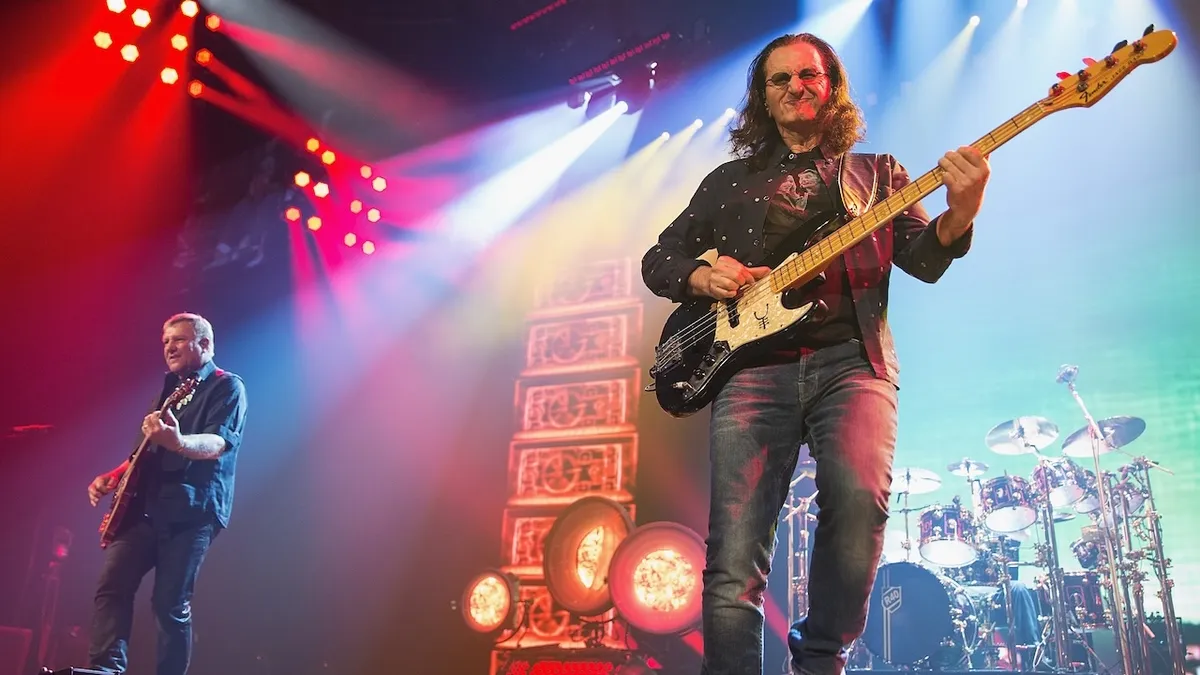
Few bands can inspire the devoted following prog-rockers Rush have in their fans. As the band approaches its 30th anniversary, Rush has released a live, two-disc DVD filmed in a Rio de Janeiro soccer stadium during the final show of the Vapor Trails tour and shows why and how they continue to inspire. Disc one contains the three-hour, 29-song live set packed with Rush’s latest songs and classic epics. It’s a kick to see Geddy Lee, guitarist Alex Lifeson, and drummer Neil Peart so clearly having a blast—and with 40,000 fans going absolutely bonkers, it’d be hard not to! Geddy blazes on his ’72 Fender Jazz Bass for all but a couple songs. His tone is bright and aggressive—but it’s not nearly loud enough in the mix. Disc two contains a documentary of their trip, called “The Boys in Brazil,” plus multi-angle shots of the band performing “YYZ,” “O Baterista,” and “La Villa Strangiato.”

—GREG OLWELL, FEBRUARY ’04

DAVE HOLLAND BIG BAND
What Goes Around [ECM]
Throughout his nearly four-decade career, Dave Holland has embodied the creative depth and probing tenacity required to be an artistically successful jazz musician. In addition to writing for and leading his own bands, Holland’s musicality has been at the heart of several of the most important groups in jazz history, from Miles Davis’s Bitches Brew-era electric ensembles to the free jazz excursions of Anthony Braxton and Sam Rivers. Recent years have brought Holland unprecedented popularity and critical acclaim; he is a ubiquitous figure atop nearly every jazz poll and has won numerous awards and commendations from some of the most prestigious musical organizations. This 13-piece big band outing is a compelling testament to the sophistication and intelligence of both Dave Holland the composer/arranger and Holland the bassist. By fleshing out his quintet with several original and commanding instrumentalists, Holland has tilled fertile soil for his organic big band concept: “the celebration of the collective by a group of true individuals.” In the tradition of Ellington-Strayhorn and Mingus, in Holland’s arrangements intricate tutti phrases frequently melt into multi-instrumental, improvisatory conversations. What Goes Around is often loosely evocative of Dixieland’s collective improvisation, although it’s poles apart harmonically and rhythmically. What Goes Around is so persuasive a musical statement that the first-time listener is left feeling much like Holland, who said of his first big band experience, “I feel like I just scratched the surface … it’s a long-time adventure that’s just beginning.”

—CHRIS JISI, OCTOBER ’02

MASTODON
Leviathan [Relapse]
Atlanta’s Mastodon is on a wild musical adventure chasing after the Great White Whale. The expertly crafted, muscular music on the group’s album, Leviathan, is filled with massive riffs, complex rhythmic patterns, aggressive vocals, and Troy Sanders’s distorted, driving bass lines— all based on the classic Herman Melville novel Moby-Dick.

— JOHN FERRANTE, JUNE ’05

BOX SET JACO PASTORIUS
Portrait of Jaco: The Early Years 1968–1978 [Holiday Park]
Finally! It took a while, but producer Bob Bobbing’s timing couldn’t have been better. The recent Jaco Pastorius tribute CD Word of Mouth Revisited [see Sept. ’03] confirmed just how much Jaco’s innovations have permeated the collective psyche and digits of contemporary bassists worldwide, and Bobbing’s much-anticipated two-CD set fills in the Pastorian puzzle’s blanks. Bobbing—a fellow Florida bassist who befriended Jaco as they hit their midteens and had the foresight to follow him around with a reel-to-reel recorder—has put together a complete package that is as valuable in its visual and verbal content as it is musically. The accompanying 78-page booklet is filled with revealing photos, personal memories, and a keen overview by BASS PLAYER founding editor Jim Roberts. The 38 tracks are interspersed with a wealth of spoken material, resulting in more of an audio documentary than an anthology, but that’s what makes this portrait so vivid. By package end, it’s apparent that while Pastorius was quick to credit his many fine musical influences and mentors (“I know where I stole every note,” he stated), in truth they were all just wrapping on his gift. Jaco was on a personal mission to take the bass to a new place. In the process he became, as trumpeter Ira Sullivan says on disc one, “The shot heard ’round the world.”

—CHRIS JISI, OCTOBER ’03

CHARLIE HADEN
Land of the Sun [Verve]
Following up on the artistic and commercial success of his recordings of Mexican and Spanish boleros for 2001’s Nocturne, Charlie Haden again works closely with pianist Gonzalo Rubalcaba on a collection of beautiful and touching songs. As always, Charlie is wonderfully recorded, and his touch on his circa-1840 Vuillaume manages to make the complex balance between gentle and powerful lines seem effortless regardless of supporting or soloing. His gorgeous tone alone is reason enough to seek out this inspirational recording.

—GREG OLWELL, OCTOBER’04

BRIAN BROMBERG
Jaco [A440 Music Group]
Since 1985, Brian Bromberg has cut a wide trail through the often-thorny jungle of the solo bass world. While maintaining an active career as a super-sideman, Bromberg has amassed a catalog of eight solo albums featuring his skills on upright, electric, and piccolo basses. His newest CD, Jaco, is a loving tribute to the music of Jaco Pastorius. Bromberg’s heavy use of upright bass as a lead instrument differentiates his versions from Jaco’s, resulting in fresh interpretations of some of bassdom’s greatest works. When recording his Italian upright, Brian gets a warm, natural sound by using an old tube microphone blended with a Rick Turner pickup. “In the last five years or so, a lot of bass players have gone back to trying to get that old, thumpy, indistinct sound of 50 years ago. There’s no clarity or sustain, but you can really feel the air movement. With modern recording techniques and a good setup, you can get that sound but with more presence and focus.”

—ED FRIEDLAND, MARCH ’03

MATT GARRISON
Matthew Garrison [Garrison Jazz Productions]
When it comes to solo debuts by electric bassists, Stanley and Jaco had it. John Patitucci and Victor Wooten, too. “It” is that rare blend of vision, skills, timing, and luck to create an album that raises the bar. With said bar having just been measured for 20th century achievements, along comes Matt Garrison to nudge it up a bit with his compelling, self-titled inaugural effort. Matthew Garrison’s ten tracks go deep, expounding on the sheer technical prowess of Matt’s groove, solo, and chordal work with Joe Zawinul and John McLaughlin, while mixing his Marcus-like gift for rich, multi-layered compositions with Zawinul-acquired, whirling Third World rhythms.

—CHRIS JISI, FEBRUARY ’01

D’ANGELO
Voodoo [Virgin]
Pino Palladino is no stranger to being in the right place at the right time. When the fretless bass made its way from jazz to pop in the early ’80s, Pino led the charge with an instrument he purchased on Manhattan’s music row, 48th Street. Two decades later, he found himself back in New York to record D’Angelo’s Voodoo. The singer/keyboardist’s 1995 Virgin debut, Brown Sugar, practically reinvented contemporary R&B—and on his long-awaited follow-up, D’Angelo digs even deeper into blending ’60s-borne sounds with hip-hop. But unlike the sterile, mechanized beats that dominate hip-hop, the Virginia native’s music has loose, almost untidy grooves courtesy of drummer Ahmir Thompson and Palladino, who favors a fretted ’63 P-Bass with flatwounds. Pino cut numerous Voodoo tracks at Electric Lady Studios in Greenwich Village over the past two years; of those, five made the CD’s final lineup. Voodoo could be the year’s best album on groove power and musical texture alone. Pino’s subterranean tone and inventive lines add quirky bounce to D’Angelo’s laid-back rhythms.

—BILL LEIGH / CHRIS JISI, APRIL & MAY ’00

BOX SET HERBIE HANCOCK
The Herbie Hancock Box [Columbia]
Solo whizzes like Michael Manring and Rob Wasserman aside, the most inspirational bassists usually share sonic space with great drummers, guitarists, horn players, keyboardists, or orchestras, whose talent and artistry help push our heroes to even greater heights. This undeniable fact is why the recent release of The Herbie Hancock Box is cause for celebration. No contemporary jazz artist has so consistently embraced the progressive nature of the genre, cutting a wide swath through every musical development of the late 20th century, and in the process employing and inspiring several of the world’s best bassists. The collection’s four discs are organized around major periods of Hancock’s unpredictable musical evolution. Discs one and two focus on his late-’70s acoustic material, particularly his super group VSOP with Ron Carter on bass. VSOP picked up where Miles Davis’s groundbreaking mid-’60s quintet left off; urbane harmony, loose structure, and muscular improvisation are the band’s trademarks. Carter is flat-out incredible; his near-supernatural chops, potent tone, and incredible sensitivity set a standard rarely matched to this day. Disc three is Paul Jackson’s realm. As a member of the Headhunters, Jackson was the fingerstyle-funk man. The greasy, probing lines he poured forth are best described by Hancock in the liner notes: “Paul Jackson is a genius. He always blew my mind.” CD three also features a lone Jaco Pastorius track, 1980’s “4 a.m.” It’s classic Pastorius, with his usual jaw-dropping 16thnote funk and deftly integrated harmonics. Disc four explores Hancock’s controversial forays into R&B, disco, and hip-hop. The annoyingly catchy “Rockit,” with Bill Laswell on bass, is a highlight, as is “Maiden Voyage/P. Bop,” featuring the one and only Bootsy Collins.

—JONATHAN HERRERA, FEBRUARY ’03

zenhouse


JONAS HELLBORG & SHAWN LANE
Zenhouse [Bardo]
Again eschewing the “more chops equals more music” ethos that typified his early work, Jonas Hellborg has created a CD that’s the musical equivalent of watching a lotus bloom. Favoring acoustic textures with subtle percussion provided by Apt-Q258 (Jeff Sipe), Zenhouse unfolds slowly but ultimately satisfies. The recording is a series of long drones interspersed with unison lines. The melodic content is strongly influenced by Eastern modalities reminiscent of Shakti—but with fewer pyrotechnics. Indeed, the first three tracks never rise above a medium simmer, and only on the final track, “Conclusion,” do we get a taste of the incredible technique of guitarist Lane and Hellborg, who strums his doubleneck Ovation acoustic with abandon. On the third cut, “Departure,” Jonas plays the Ovation’s fretless half and captures a sarod-like vibe. Lane seems content to lay back and drone while Hellborg does most of the melody work—though in a way, it hardly matters. This record is not about who is soloing or who is accompanying. It’s simply a musical moment captured for eternity. Recorded live in Sweden, the CD beautifully documents the sound of the acoustic instruments and of the performers themselves. At times you can hear them breathing, and Hellborg occasionally sings in unison with his haunting improvisations. Zenhouse is best listened to in its entirety, so set aside some time (54:09 to be exact), get comfortable, and enter the moment.

—ED FRIEDLAND, FEBRUARY ’00

bprec_colors

AVISHAI COHEN
Colors [Stretch]
Avishai Cohen’s authoritative upright presence and compositional sense speak with a singular voice, with his Latin/Near Eastern influences freshening an allegiance to traditional swing and melody. A master of percussive ostinatos, he uses upright slides and harmonics to drumful effect and guides subtle grooves with woodtined electric double-stops and harmonics.

—RICHARD JOHNSTON ,NOVEMBER ’00

 bprec_cascreamen


DIXIE DREGS
Californis Screamin’ [Zebra]
Dregsman Andy West is back and playing better than ever. Dave LaRue shares bass duties with his trademark growl, laying down muscular grooves and nimbly executing Steve Morse’s twisted unison lines.

—ED FRIEDLAND, APRIL ’00

BILL LASWELL
Dub Chamber 3 [ROIR]
Meditative and dance music, Western groove sensibilities, and ’70s Miles Davis make a perfect match for the juicy dub bass work of Bill Laswell and Jah Wobble.

— E.E. BRADMAN, AUGUST ’00

EDGAR MEYER
Bach Unaccompanied Cello Suites [Sony]
Bach’s cello suites have appeared in transcriptions for just about every instrument. The music’s richness and technical demands make for invaluable study material—few student bassists haven’t scraped their way doggedly through at least some of these pieces. Getting them to performance standard is another matter. Many passages—particularly those using open strings and double-stops—lie right under the cellist’s hand but are almost unplayable on anything else. So the best you could hope for, doubled over the bass and straining every muscle, is to sound like a not-very-good cellist. Then along comes Edgar Meyer. Meyer’s freakish ability goes beyond mere virtuosity, as he negotiates the intricacies of this near impossible music with astonishing effortlessness on his solo-tuned 1769 Gabrielli. Meyer allows the music to speak for itself, making it hard to believe it was never intended for the bass, or even that it is particularly difficult. Performing suites 1, 2, and 5, the Tennessee native brings a lilting beat to the faster movements, reminding us that gigues, minuets, and the like are indeed dances (something countless cellists, with their ghastly over-romanticized interpretations, seem to have forgotten). Edgar plays the slower movements with an unaffected soulfulness, a product perhaps of his 30 years of private practice on the suites. Overall, this recording seems closer to the spirit of the music than most previous versions.

—SIMON WOOLF, NOVEMBER ’00

JEFF BERLIN
Taking Notes [Denon]
Taking Notes, Jeff Berlin’s Denon debut (and his first solo album since 1986’s Pump It!), packs a potent punch. Before you can recover from being “Stung, McCartney’d & Bruced” by the powerful, rollicking opening track, Berlin is already leading you on a whirlwind musical journey through sassy big-band blasts, deft solo chordal ballads, brooding Latin romps, updated Americana, and sweeping jazz-rock fusion movements. Jeff may be taking notes— but he’s definitely taking no prisoners. He confesses, “I had ten years of music stored up, and it all came flooding out.” Among those helping him to navigate his sea of ideas are Tribal Tech keyboardist Scott Kinsey, trumpeter/arranger Howie Shear, drummer Cliff Almond, keyboardist Clare Fischer, percussionist Alex Acuña, and guitarists Ron Eschete and Billy Lang.

—CHRIS JISI ,JANUARY ’98

CHRISTIAN MCBRIDE A Family Affair [Verve]
On A Family Affair, Christian McBride reveals his deep electric roots as he guides his growling fretless and beefy 5-string (often colored with numerous effect pedals) through fertile fusion and funk originals. And bringing his background full-circle are outstanding, upright-led jazz treatments of Sly Stone’s “Family Affair,” Stevie Wonder’s “Summer Soft,” Earth, Wind & Fire’s “I’ll Write a Song for You,” and Kool & the Gang’s “Open Sesame.”

—CHRIS JISI , OCTOBER ’98

BUENA VISTA SOCIAL CLUB
Buena Vista Social Club [World Circuit/Nonesuch] Cachaito’s gorgeously recorded upright propels the band with his delightful and identifiable syncopation.

—GREG OLWELL, OCTOBER ’99

BECK
Mutations [DGC]
Grabbing an upright for nearly half the tracks, Justin Meldal- Johnsen proves he has the stylistic versatility to keep up with the moody meanderings of his Beatlesesque boss.

—CHRIS JISI, FEBRUARY ’99

REISSUE DONNY HATHAWAY
Live [Wea International]
When Live was released in 1972, Donny Hathaway stood alongside Stevie Wonder, Marvin Gaye, and Curtis Mayfield as one of the primary forces in an emerging soul music renaissance. In reaction to the social and political turmoil of the time, Hathaway employed the genre’s expressive vocals and hard-grooving tracks to elucidate the ghetto’s plight or to reaffirm lost love. Like his peers, Hathaway fleshed out his innovative music with the brightest musicians of the day, as evidenced by his top-shelf band on Live. Willie Weeks, who went on to achieve great mid-’70s session success, plays brilliantly on each track, never distracting from the main attraction, Hathaway’s evocative and powerful voice.

This emotionally charged album, recorded at the Troubadour in Hollywood and New York’s Bitter End, is the perfect relic of a sorely missed musical era. On Hathaway’s clever take of Marvin Gaye’s soul anthem “What’s Going On,” Weeks pays homage to James Jamerson while forging his own, equally effective, approach. “The Ghetto” is a classic funk workout, with a disciplined, loping bass line. The yearning cover of John Lennon’s “Jealous Guy” is flawless; Hathaway delivers the original’s simple and honest message with his own deep, soulful emotion. The gospel-tinged “Voices Inside (Everything Is Everything)” has a revelatory bass solo, wherein Weeks demonstrates what patience and pocket are all about. Tragically, Hathaway took his own life on January 13, 1979 at age 33. A long struggle with clinical depression brought passion and honesty to his music, but it ultimately raged beyond control. Still, Live is an enduring testament to one of a generation’s most gifted artists.

—JONATHAN HERRERA ,SEPTEMBER ’03

PHISH
A Live One [Elektra]
If you’re a musician, you have to love Mike Gordon and Phish—even if you’re not crazy about their music. Here’s a highly accomplished band that can sell out Madison Square Garden in four hours with no hit single, very little mainstream press, and only a few poorly received minutes of MTV exposure. Their seven excellent albums have been “hits” not through corporate wheeling and dealing but because of an incredible grass-roots network of devoted fans, the Internet newsgroup rec.music.phish, and the band’s homespun newsletter, Döniac Schvice. And since the death of Jerry Garcia, they’ve been adopted as the band of choice by several thousand former Deadheads, who make the Phish-concert parking lot scene virtually indistinguishable from a Dead show’s. Is Phish merely the “Truckin’” band of the ’90s? Not on your life. Hardcore “Phish Heads”—the ones who resent the proliferation of acid dealers and gate crashers at recent shows—know a Phish concert is more a musical event than a countercultural convention. While the Dead’s improvisational jams could be great at times, Phish is consistently much tighter, more creative, more energetic, and more sophisticated. In fact, strip away all the tie-dyed, trippy-dancing, ticket-begging trappings that are now firmly allied with Phish, and you’ll find four great musicians capable of reaching heights of spontaneous artistry far surpassing that of any other rock & roll band working today.

—KARL CORYAT, DECEMBER ’96

VICTOR WOOTEN
A Show of Hands [Compass]
In somewhat of a departure from his work with the Flecktones, Victor Wooten uses the solo spotlight to show us his personal musical vision. Wooten is one of the gifted few who can play bass, rhythm, and melody all at once with no overdubs, a talent that makes his music not merely accessible but catchy and compelling. With Béla Fleck & the Flecktones, Victor Wooten has gracefully shown us the balance between being a supportive sideman and a featured soloist. Even in his Bass Extremes collaboration with Steve Bailey, it’s always been clear that Wooten finds it most satisfying to make the music happen with others. As amazing as it is to hear him in a group, though, it’s even more exciting to hear him expressing his personal vision through his playing.

—BILL LEIGH, APRIL ’96

JAMIROQUAI
Traveling Without Moving [Sony Soho Square]
Jamiroquai may not be a household name in the U.S.—but if the rest of the world is any indication, Stuart Zender’s group will probably be topping the charts Stateside before long. His fellow bass players have certainly begun to spread the word about the 22-year-old Englishman, and for good reason. Zender’s highly stylized, confident, and very upfront playing is in many ways the musical centerpiece of the group’s smooth, soulful sound. Jamiroquai blends funky grooves, soulful feels, dance rhythms, and superb musicianship while rejecting the current R&B status-quo of sampling and looping the rhythm tracks. It’s all the real deal—and Zender’s playing is often as prominent as Jay Kay’s Stevie Wonder-like vocals.

— S.L. DUFF, MAY ’97

MEDESKI MARTIN & WOOD
Shack-Man [Gramavision]
When he isn’t firmly lodged in the pocket, Chris Wood can sometimes be found in space, exploring microtones and creating new sounds by pulling the strings off the neck or calmly banging them with a drumstick. His deadpan expression belies the exuberance of his explorations, and even though he plugs his Pfretschner directly into an SWR Redhead, the sounds he makes are often not those associated with the acoustic bass: One second it’s nasal plinks, the next it’s meaty ostinatos worthy of Jorge Casas. At the time, of course, each sound is appropriate. “You can be the most amazing player with great chops, but it comes down to the choices you make—the sound, the notes,” Wood says. “There are so many stereotypes related to sounds. You use a certain distortion or reverb, and it immediately reminds the listener that it’s jazz or fusion or whatever. My ideal has been to function as a bass as much as possible, but to use as few clichés as possible.”

—LUKE MITC HELL, JAN / FEB ’95

MESHELL NDEGEOCELLO
Plantation Lullabies [Maverick],br> Yes, Meshell Ndegeocello is an A-list bass player—she’s made that abundantly clear with the deep-pocket grooves and snakily soulful bottom-end commentary that power Plantation Lullabies. From the funk snap of “Soul on Ice” to the weighty punch of “If That’s Your Boyfriend (He Wasn’t Last Night)” and on through the supremely easy glide of “Dred Loc,” the diminutive Ndegeocello walked onto the pop scene as a big player irrefutably in command of her four strings.

—CHUCK CRISAFULLI, APRIL ’95

BEN HARPER
Fight for Your Mind [Virgin]
Juan Nelson’s life-long absorption in R&B and soul has led him to quite a few places—sessions, touring, and TV shows around the planet with musicians from P-Funk alumni to Roger Clinton. For the last ten years, however, Juan has brought his sensitive yet bootylicious bass work to Harper and the Innocent Criminals, sharing the funk with a whole new generation and stoking the fire under Harper’s righteous redemption songs.

— E.E. BRADMAN, AUGUST ’01

CACHAO
Master Sessions, Vol. 1 [Crescent Moon/Epic]
While the 12 tracks here cover every Afro- Cuban dance form Cachao either invented or embellished, ‘Descarga Cachao’ tells you everything you need to know about his genius.

—CHRIS JISI, APRIL ’95

311
Grassroots [Capricorn]
Hip-hop, metal, funk, R&B, reggae—you name it, 311 fuses it. PNut’s funky finger lines are the perfect glue for the eclectic mix, and he throws in wicked slap parts here and there, too. The band’s aggressive assault gets a little grating after 14 cuts, but it’s good medicine in moderation.

—KARL CORYAT, MARCH ’95

DAVE MATTHEWS BAND
Under the Table and Dreaming [RCA]
Amidst root-rangers and “look at me” slappers, bassist Stefan Lessard is a shining light. While breathy sax and violins careen in and out of guitarist Matthews’s charged acoustic rhythms, Lessard spends most of his time outlining changes and maintaining the groove. That alone is admirable. Coupled with his ultra-punchy tone and happenin’ rhythmic twists, it’s downright cool.

—GREGORY ISOLA, JULY / AUG ’95

BÉLA FLECK & THE FLECKTONES
Three Flew Over the Cuckoo’s Nest [Warner Bros.]
It’s easy to rail against all the chopsmeisters out there … and then along comes Victor Wooten.

—JIM ROBERTS, NOVEMBER ’93

INFECTIOUS GROOVES
Sarsippius’ Ark [Sony]
Robert Trujillo’s a soopafonky bassist who’s downright groovayshus.

—SCOTT MALANDRONE, MAY / JUNE ’93

RED HOT CHILI PEPPERS
Blood Sugar Sex Magik [Warner Bros.]
Put quite simply, Blood Sugar Sex Magik showcases some of Flea’s best work in the Red Hot Chili Peppers’ ten-year history. “Most of my influences have been emotional, not technical,” says Flea. “As a result, I try to apply all of my spiritual and physical energy to the music and believe in it.” That conviction has been a big part of the Chili Peppers sound, which has evolved along with the band’s shifting personnel. Blood Sugar Sex Magik captures the crystallization of a solid lineup: Flea, guitarist John Frusciante, drummer Chad Smith, and vocalist Anthony Kiedis. This album represents a stylistic evolution: Although the thrust of the Chili Peppers’ music is still pelvic, it lacks the balls-in-a-blender jockrock frenzy of their previous efforts. Instead, funk—which has been a seed in the Chili Pepper pod all along—has become the main ingredient in the band’s genre-spanning mix. Flea no longer plays a million notes a second, but his playing is heavier and deeper and richer than before.

—KARL CORYAT, JAN / FEB ’92

RAGE AGAINST THE MACHINE
Rage Against the Machine [Sony]
Tim Commerford is easily one of the best rock 4-stringers around today, and his band will crush you with their powerful delivery and shock-wave grooves. Tim’s tones run from tight-n-snappy to full-bore grind.

—SCOTT MALANDRONE, MAY / JUNE ’93

PRIMUS
Frizzle Fry [Caroline]
Primus’s sweaty, smirky live shows have earned the group a fanatical grassroots following on its northern California home turf, and Primus psychosis seems likely to spread: The group’s new record, Frizzle Fry, recaptures the spirited spontaneity of its debut EP (the low-budget, highenergy Suck on This), but with sharper production and wilder performances, especially from Les Claypool.

—JOE GORE, FALL ’00

CHICK COREA ELEKTRIC BAND
Inside Out [GRP]
Aside from Anthony Jackson (who invented the thing), only a few players have demonstrated a capacity for exploring all of the 6-string bass’s dimensions. One of the best of those is John Patitucci. Corea’s intricate, demanding compositions require fast hands and big ears, and Patitucci has both. His ability to switch from insistent vamps to walking lines is especially impressive.

—JIM ROBERTS, SUMMER ’90


Leave a Comment
Name:
Location:
Average Rating :
 

Alan Parsons Art and Science of Sound Recording Series

The New Golden Age Of Metal, The Complete Interviews

William Murderface Of Dethklok

Steve DiGiorgio, Extreme Metal Session Ace

Sharlee D’angelo of Arch Enemy


What's your take on modern metal?
 
Subscribe Live Bookmarks Advertise Contact Us Privacy Policy Terms & Conditions


Bass Player is a trademark of New Bay Media, LLC. All material published on www.bassplayer.com is copyrighted @2009 by New Bay Media, LLC. All rights reserved