Music’s Most Fluent New Voice
Richard Bona
August, 2006
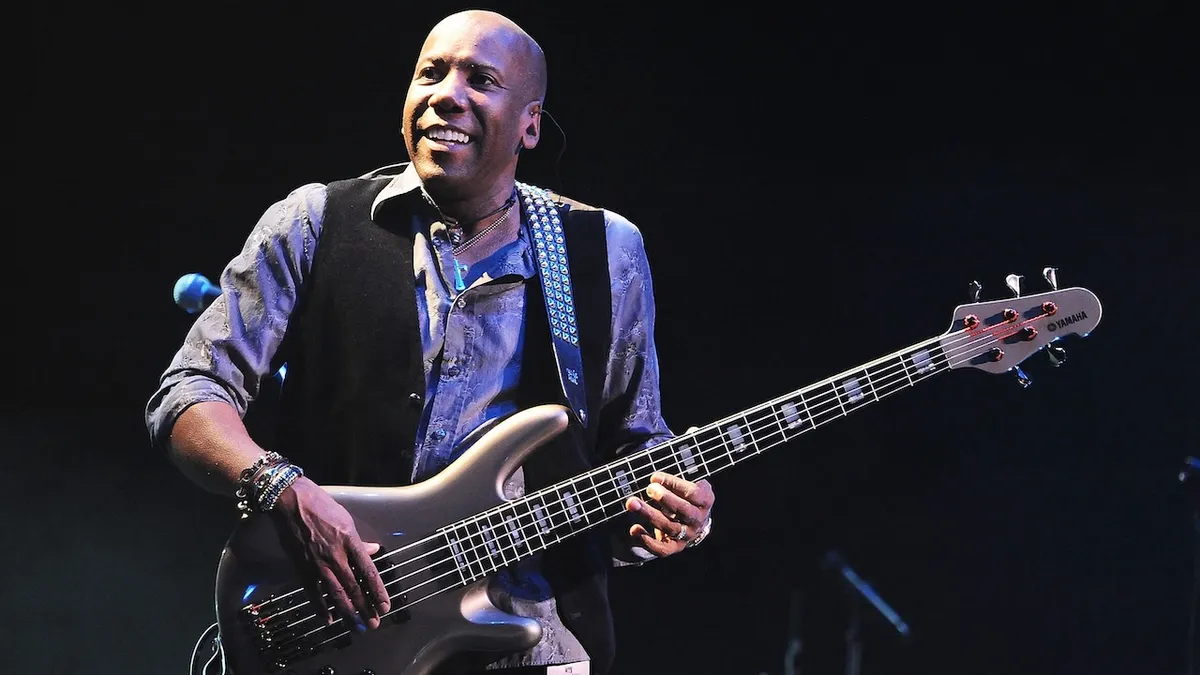
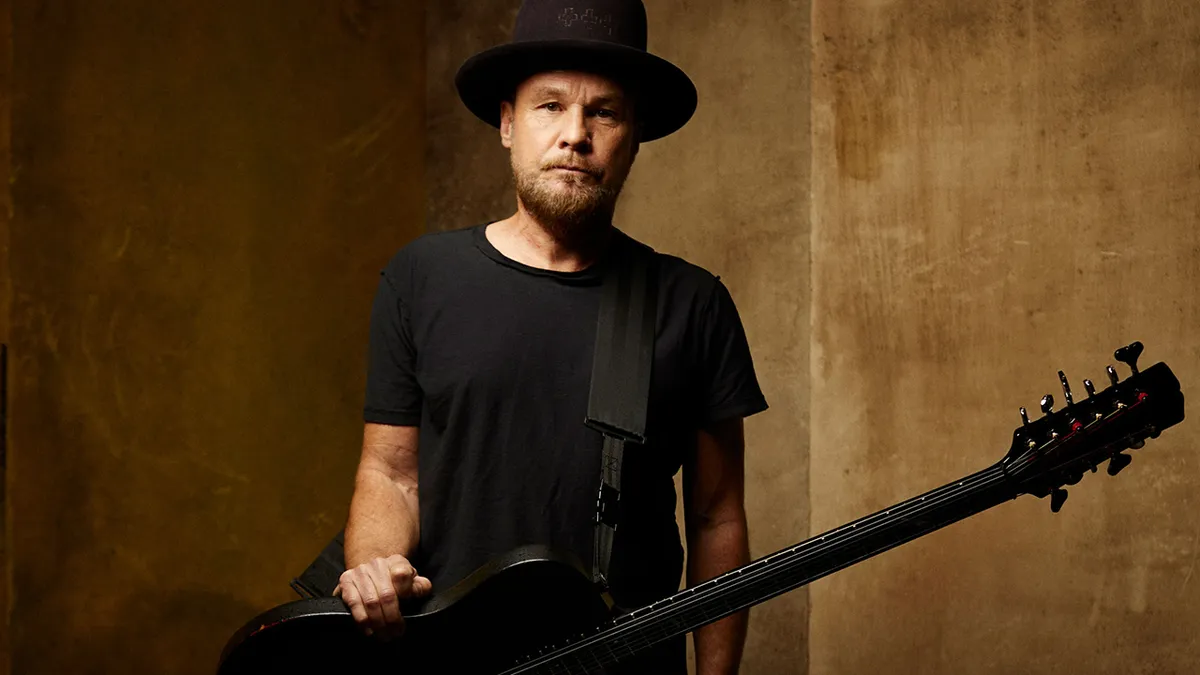
With bass in hand, Richard Bona speaks many languages—but catch him in the middle of a heartfelt phrase, and it’s as if his notes are chosen just for your ears. Add his haunting falsetto vocals, and now you’re listening to arguably the most identifiable, soul-stirring voice on the bass guitar since Jaco Pastorius. It’s no wonder that since his 1995 arrival in the U.S., the 39-year-old native of Cameroon has become one of the most in-demand sidemen for a daunting range of artists. Of course, that’s only part of the picture. While Richard’s fluid fingerboard navigation, multi-layered rhythmic approach, and sheer lyricism have earned him bass hero status, he has parlayed his singular vocals, unique guitar style, and sonorous songs steeped in traditional African tales into a career as a globally successful solo artist, selling tens of thousands of CDs worldwide.
Bona’s latest effort, Tiki, is another step forward in his personal expression. The 15-track disc (featuring Bona’s usual cohorts, keyboardist ATN Stadwijk and drummer Vinnie Colaiuta, plus potent guests like John Legend and Djavan) is a joyous interpretation of Brazilian music. South American influences notwithstanding, Tiki, more than Bona’s three previous outings, blurs the lines between his world music hybrids and sounds simply like, well, Bona. As always, bass worshippers will need to listen between the layers to catch the bottom-end brilliance, and Bona’s vocals in his native Douala require a different mind-and-ear awareness. But the payoff is as grand as a sprawling African plain.
Richard Bona was born in the mud-hut village of Minta, Cameroon, on October 28, 1967. His mother was a singer and his grandfather was a percussionist, so there was always music around the household. Richard recalls, “My grandfather knew I was a musician when I was three because up to that point all I used to do was cry and eat, all day long. Then one afternoon I heard a balafon [a wooden marimba-type instrument that is struck with two mallets and amplified by gourds under the keys] during a church rehearsal at my house, and I was enchanted; I stopped crying and eating, and just sat there listening for hours! My grandfather built me a balafon, and I began practicing 12 hours a day.”
After years of singing and playing in church, Richard ventured over to the large port city of Douala at age 11 and realized he needed to learn a more modern instrument. Swiping brake cables from a local bicycle shop, he soon built his first homemade guitar. With his reputation as a local virtuoso intact, Bona eventually landed a guitar gig with a dance band in Douala. He recalls, “My hero was George Benson; I learned all of his Breezin’ solos note-for-note, and I’d sing his songs phonetically—I had no idea what the words meant.” It was not long after, in 1980, that a French owner of a local club asked Richard to start a house jazz band, and entrusted him with a huge collection of jazz albums to draw from. As the legend goes, the first platter Bona picked up happened to be Jaco’s self-titled 1976 Epic debut, and Bona immediately switched to bass. “Jaco touched me deeply,” he offers.
After the death of his father, Bona left Africa for Paris in 1989. His rapid rise to first-call status with top French and transplanted African artists led to an appearance on Joe Zawinul’s 1992 disc, My People. It also led to a letter from frustrated French authorities saying they were not going to renew his work papers because “there are 1,602 unemployed bassists in France.” Taking it as a sign from a greater authority, Bona heeded guitarist Mike Stern’s advice and moved to New York City in late 1995. Upon arriving, Richard hit the club jam scene, reconnected with Zawinul for a tour, and landed his first steady gig with Harry Belafonte. Word spread quickly through various musical tribes, leading to local work with Stern and Randy and Michael Brecker, as well as stints with Bob James, Chaka Khan, Paul Simon, and Branford Marsalis. The Marsalis connection resulted in Sony signing Bona for his 1998 debut, Scenes From My Life.
In the ensuing years, Richard went on to bolster his recording resumé, tour with Pat Metheny, and release two more CDs. Since 2004, he has focused mainly on his own music and touring with his sextet, doing periodic sideman gigs overseas with Stern, Steps Ahead, and the Jaco Pastorius Big Band—plus sporadic New York hits at Zinc Bar, with his own band, or at the 55 Bar with Stern.
How do you see yourself as an artist, and where is bass in the equation?
I just see myself as a musician. It’s been that way since I was a little kid, playing a lot of instruments. Of course I’m a bass player, but I also sing, play guitar, and write every day, so I’m a musician. I write songs about my perception of life, which also makes me a storyteller. I have no problem being celebrated as a bassist—in fact, I recently returned from Victor Wooten’s Bass Nature Camp, where I had the time of my life. But people ask me all the time about making a bass solo record and I have to admit, it’s not even on my radar. Those kinds of projects are cool, but to me bass is made to hold the house up. We can’t solo all night and I know I can’t listen to it all night.
How would you describe your music?
Well, it’s my music—a combination of the traditional African music I learned growing up, combined with the outside influences I gathered from living in big cities like Paris and New York. As with most musicians, I dislike labels. When music of any kind touches me I embrace it and learn it; that’s the only distinction I give. The U.S. is the greatest country in the world, but unfortunately it’s not open musically. Music is very formatted here. It has become a form of sound pollution, with loud sampled drums being pumped into every public place. And people get used to it; when kids see a live drummer playing a kit now it sounds weird to them—they expect a big, heavy drum-machine thud. So touring in the U.S. with my music is rough. I did only nine dates here last year. I spend most of my time playing overseas.
How do you come up with songs and put your tracks together?
I write almost everything on this [holds his Taylor nylon-string acoustic guitar], or occasionally on keyboard. My concept is that everything is in the guitar part: the drums, the keyboard part, and the bass. The bass part is already there; I just have to polish it and make it better. After I get the tune on guitar, I make a demo in my home studio, playing guitar, keyboard, bass, and programmed drums. Then I’ll bring it to the musicians to interpret and record in a real studio.
What was your concept for Tiki?
To make a CD about how closely Brazil and Africa are related musically, culturally, and in so many other ways. When you play Brazilian music in Africa, people start dancing right away, without asking about the record. There’s the same connection with our food. I wanted to sing about that relationship: the things we smell, touch, taste, and hear in our everyday lives that bring us together. I made friends in Brazil on my recent visits and I wanted to record at least part of the album down there. I also recorded in Paris, L.A., and New York, and I was trying to record in India. It’s my usual global affair.
Let’s discuss your vocal side: You usually sing in your native Douala, and you’re known for your falsetto voice.
I’ve tried singing in English and French, but I’ve found music always speaks better in your native language. Singing in my falsetto comes naturally. I don’t consciously separate it from my natural voice. I have no formal vocal training and I don’t really practice. My mother was a singer and I’ve been singing as long as I can recall. Where I grew up, you’re not a musician if you don’t sing. It was strange to me that in France and the U.S. people were just playing their instruments.
You’ve said singing has helped your bass playing.
When I started to play bass after hearing Jaco, I was so wrapped up in the challenge of learning the notes that I became a little bit mute. Then I woke up one day at 23 and thought, Where did my singing go? I’ve always been able to sing along with anything I play. It took me a minute to get it back, and now I’m at the point where I’d rather sing and play bass than just play bass. Singing has helped my bass playing by making me slow down and become more expressive. I love it when Marcus Miller says he tries to sound like Stevie Wonder or Chaka Khan, with all of their mannerisms and slurs. Singing puts you in a more emotional place that will lead you to develop a different and more dynamic approach to tone and attack. I always advise bassists to sing and play melodies on bass. When a bassist is singing, you can hear it. You can smell it, it sounds so funky!
How does that correlate to your soloing?
I’m always singing with my solo, whether it’s aloud or not. I try to solo from my heart. I never think of scales or changes. A song or a solo is created by tension. My grandfather always told me: Make your own chord in the music. You’ve got to sound like you. Mean every note and make the audience remember that note till they die.
Let’s talk about your technique. You’ve said the balafon had an impact on your bass playing.
It impacted my guitar playing more, but certainly bass, too. We called the style of balafon playing I learned, “half-solo.” It was a sort of melodic rhythm part that went in-between the bass player and the person playing the melody. You would support and play counter to both. The balafon helped develop my ability to play independent lines with my right and left hands. On guitar and bass, I recreated that by playing independent melodies—or a bass line and chords at the same time—using a fingerstyle technique, with my thumb, index, middle, and ring fingers. [For examples of this approach on bass, check out “Konda Djanea” and “Eyando,” on Bona’s first CD, Scenes From My Life.] The rest of my bass technique is pretty standard: thumb slaps and index pops, and palm mute with thumb and index plucks.
Since moving to the U.S., you’ve done a slew of sideman recordings and gigs. How do you typically come up with bass lines in those settings?
My bass lines always come from my singing. I’ll listen to the track and something will come to mind. Sometimes the artist will give me a demo, maybe with some sequenced keyboard bass, and I’ll make it my own. I like to give people a lot of options because I come from a wide range of influences. In groove mode, I’ll think about James Jamerson or Stevie Wonder. Also, Paul Jackson with Herbie Hancock and the Headhunters; people forget what a giant he was.
Did you dig into the upright at any point?
I played it for four years in France. I was doing gigs, but I had problems with my back. Cabs in Paris won’t take all that equipment, so I had to carry the bass, a head, and a speaker on the subway up and down those long fights of stairs. I’d get to the gig and be dead tired. And then I had to get home! So I gave it up. My main influences at the time were Ray Brown and Sam Jones, who’s another underrated giant. I’ve never really gotten back into upright again.
You’re a regular with the Jaco Pastorius Big Band.
Man, is that gig great! [Bandleader] Peter Graves is wonderful, the band is unbelievable, and I get a chance to be Jaco for a little while, with that big band sound behind me. I know all of those songs by heart, and the bass parts are pretty much intact because it was Jaco’s music—so I just ask Peter if there are any major changes in the arrangements and I go for it. When I was 19, some people referred to me as Jaco’s clone. I had a fretless Jazz Bass, a bandanna, and the same clothing! I sounded just like Jaco, which wasn’t a bad thing at the time, but I grew past it. I never met him or saw him in person, but his impact on me is immeasurable.
Who are your current bass favorites?
I love Marcus Miller, Victor Wooten, Christian McBride, and all of the great African bassists, like Étienne Mbappé of Joe Zawinul’s band. I also like my fellow Brooklyn bassists like Victor Bailey, Matt Garrison, and James Genus—he’s everywhere these days. John Benitez is heavy, Oteil Burbridge is amazing, and Gary Willis is bad. And of course, Anthony Jackson. What makes these players great is they all sound different. We’re in a good period for bass. It’s a high cycle now.
Recently, you began teaching at New York University.
I got a call from Dr. David Schroeder, Director of Jazz Studies at NYU, about teaching there. At first, I thought, No way! I’ve never taught before and I’m not patient. Plus, the academic thing is too rigid, and I don’t believe everyone can learn music and be a musician. Then I went in and met the young players and they were very enthusiastic. I took on a jazz ensemble harmony and improvisation class. I didn’t have a curriculum. I just wanted to teach them how to be a band. We studied and played tunes like “Eternal Triangle” [from Dizzy Gillespie’s 1957 Verve classic, Sonny Side Up, with Sonny Stitt and Sonny Rollins], and I showed them some traditional African grooves. I really enjoyed it. In September I’m going to teach a bass class.
Your career path has been pretty positive to this point.
A writer recently asked me what my dream was. I said, “Man, I’m in my dream!” I’ve been living my dream for years. I’m creating music, raising my kids, and living a very blessed life. I’ve been lucky enough to have played with most of the living musicians I wanted to play with. I’m happy. More people probably need to realize that about themselves. My grandfather used to say, Don’t be like the man who has his feet stuck in the lake, but he dies thirsty!
Talkin’ Tiki
“Please Don’t Stop” John Legend and I did this track for Puma’s collaborative CD Africa Plays On. I wrote the music, and I told John that my idea for the song was about trying to convince a girl to stay. He came up with the lyrics in an hour and then sang the hell out of it! He’s an amazing musician and artist.
“Dipama” A good example of a song I wrote on guitar that all the other parts came from. I’m singing about learning. You learn more by listening to others; most of the time it’s better to be quiet and just listen.
“Tiki” This establishes the album’s theme: the connection between Africa and Brazil. Feel-wise it’s sort of a baion groove with a bass line that’s more makossa, and there are elements of Indian music, as well.
“O Beta O Siba” The title means “up and down.” It’s a love song for a lady who is running away from a man who loves her. The groove is sort of reggae funk, which Vinnie Colaiuta embellishes with his rhythms. I palm-muted my Fodera 5.
“Esoka Bulu (Night Whisper)” What every woman whispers to her lover at night, when it gets quiet. It’s a jazz ballad in three with Ari Hoenig, who is the greatest brush player in the history of drums. He could sweep up all of Brooklyn in an hour!
“O Sen Sen Sen” I see music in colors, and I like my records to be in a lot of colors. This track combines salsa, African rhythms, and accordion from Brazil. The song is saying, “You ain’t seen nothing yet!”
“Manyaka O Brazil” This is the main song when it comes to telling the story of this record; the groove is very open and can go anywhere. I wrote it thinking of Djavan, and I was so blessed that he came and sang it.
“Three Women” I didn’t want to do a famous Jaco song—I wanted a surprise. Gil Goldstein found this for me; it was just a tape of Jaco playing the tune on piano. We came up with a feel and a string arrangement. Gil brought in the Flux Quartet and I played my fretless New York Bass Works 4.
“Ba Senge” The song addresses learning about differences in order to understand others. It’s pretty much a funk groove. I’m not a great slapper, but I enjoy it. I used my ’66 Jazz Bass.
“Akwa Samba Yaya” This song celebrates black heritage in Brazil. It’s a Salvadorian samba mixed with African guitar and percussion.
“Calcabao de Copacabana” I call this a samba cancon groove. It’s what I feel inside while staying in Rio de Janeiro and walking along the beach.
“Samaouma” Samaouma is a tree in the Amazonia jungle that Indians used for many purposes. They used to communicate by hitting the tree. Musically, everything is in here: Argentinean tango, Colombian cumbia, a bit of Pat Metheny, African guitar, and even classical music.
Richard’s Realm
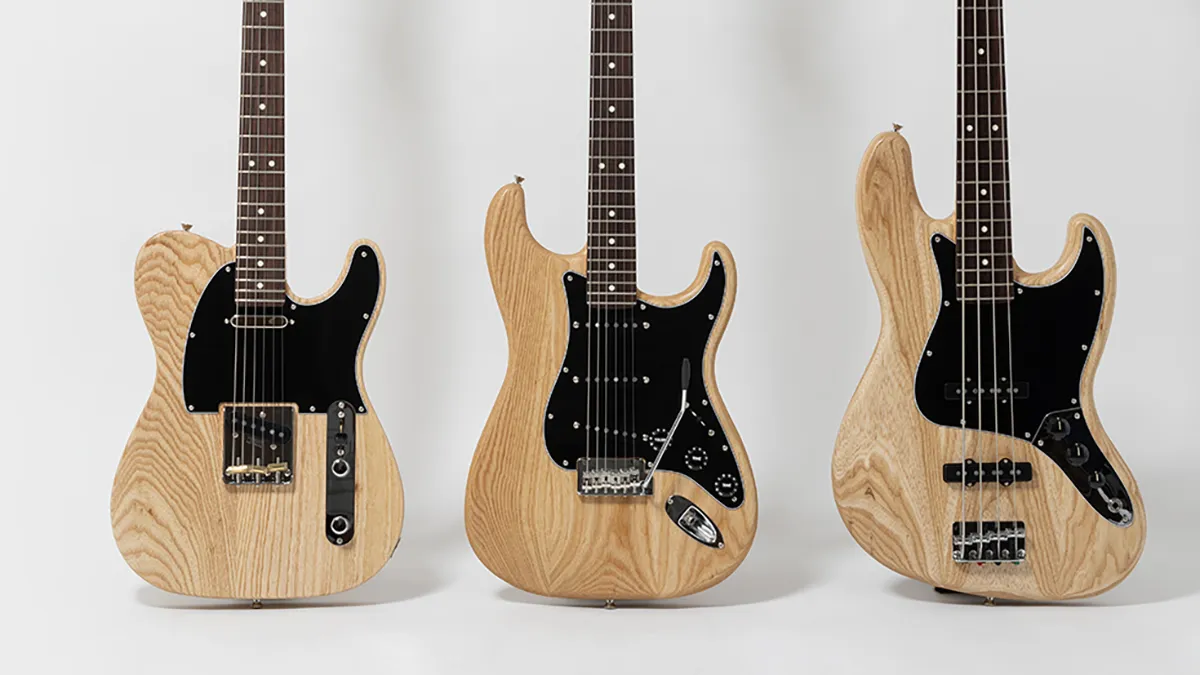
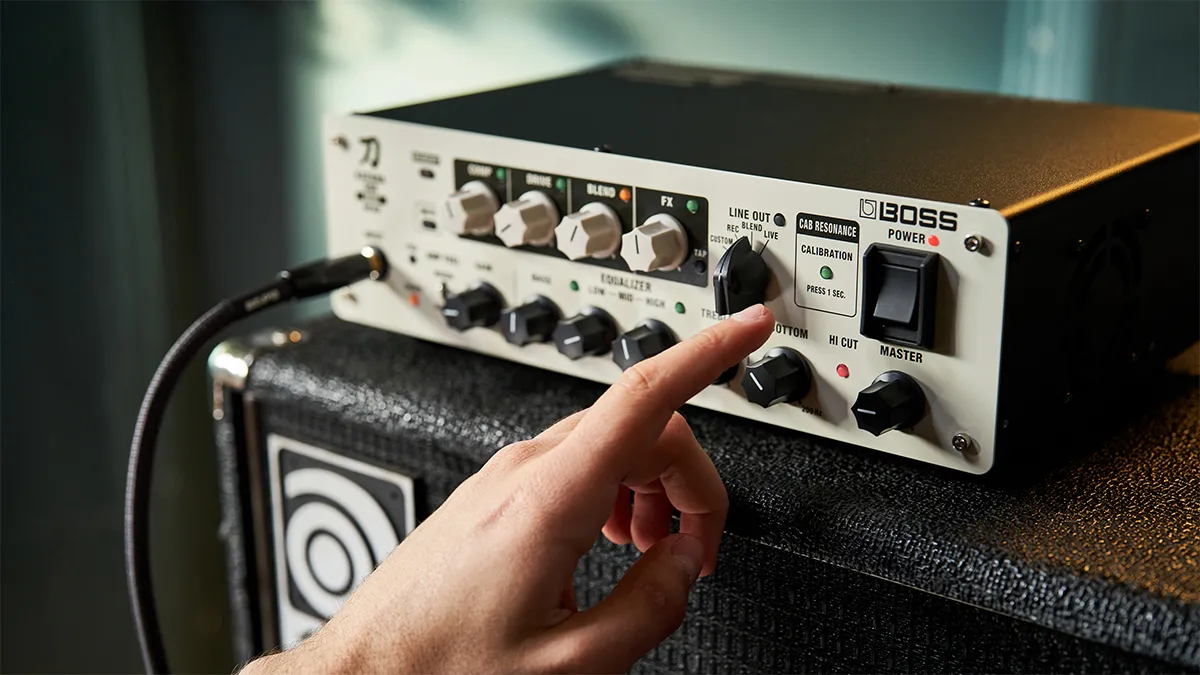
Richard Bona’s musical voice may be singular, but his bass choices are varied. Chief in his rotation are his Fodera Imperial 5-string, fretless New York Bass Works 4-string, ’66 Fender Jazz Bass, fretless Pensa-Suhr J-Bass, and fretless Fodera Beez Elite 5. His strings are DR Sunbeams (.040, .060, .080, .100, .125). Live, Richard always plays in stereo because it makes the bass easier to hear when he sings. His Epifani rig consists of a custom stereo UL-502 head and two T-112 NYC cabinets. Effects include an MXR M-134 Stereo Chorus, Boss LMB-3 Bass Limiter Enhancer pedal, Boss DD-6 Digital Delay pedal, Boss FV-50H Volume pedal (used for dynamics), Roland GR-20 bass synth (for string sounds), Roland V-Bass, E-Pro UK Bassic Stomp Box (for EQ brightness when slapping), and a Boss TU-2 Chormatic Tuner pedal. Richard’s vocal mic is a Shure Beta 87.
Selected Discography
Solo albums Tiki, Decca; Munia: The Tale, Verve; Reverence, Sony; Scenes From My Life, Sony. With Mike Stern Who Let the Cats Out?, Heads Up; These Times, ESC; Voices, Atlantic. With the Jaco Pastorius Big Band (both on Heads Up) The Word Is Out!; Word of Mouth Revisited. With Joe Zawinul Faces & Places, ESC; World Tour, JVC Victor, My People, Escapade. With Pat Metheny The Way Up, Nonesuch; Speaking of Now, Warner Bros. With Bob James Joy Ride, Warner Bros. With Randy Brecker Hangin’ in the City, ESC. With George Benson Irreplaceable, GRP. With Larry Coryell Spaces Revisited, Shanachie. With Toto Bona Lokua Toto Bona Lokua, Sunnyside. With Frank McComb Love Stories, Sony. With Les Nubians One Step Forward, Omtown. With Jonathan Elias Prayer Cycle, Sony Classical.
On DVD Mike Stern Live—The Paris Concert, Music Video Distributors; African Tale, Universal; With Pat Metheny: Speak of Now: Live in Concert, Eagle Vision.
Web site www.bonatology.com