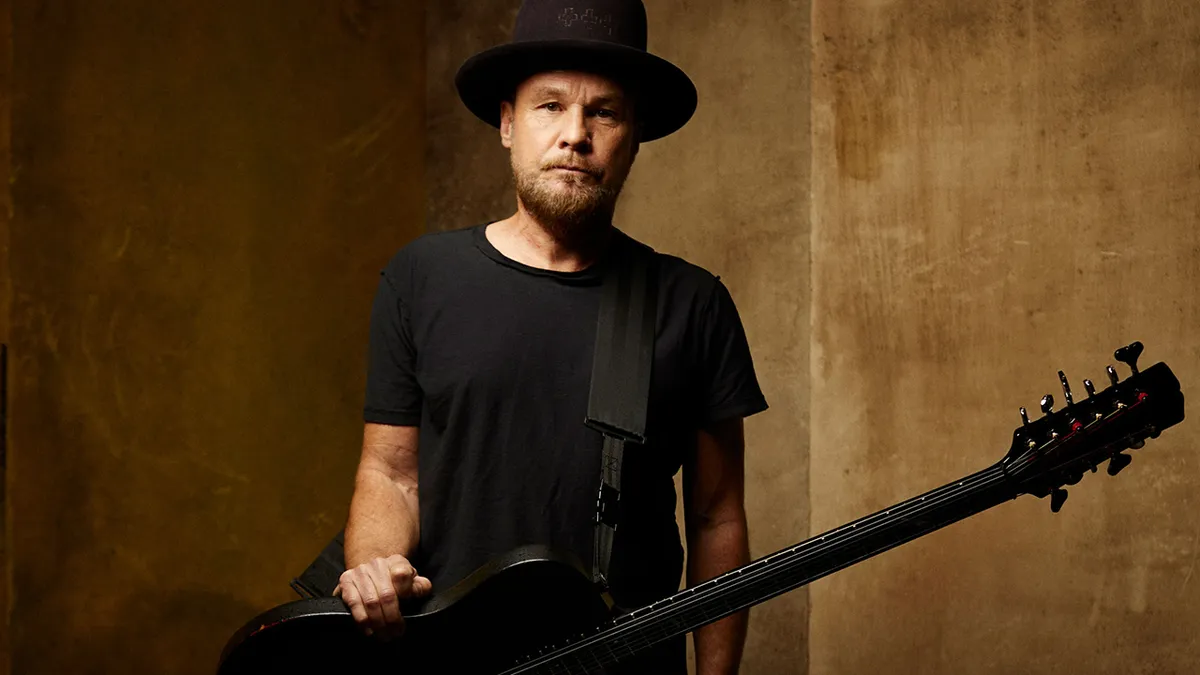
Willie Weeks Does It All

 
Richard Johnston ,Jul 29, 2005


Willie Weeks • Donny Hathaway’s Live • “Voices Inside (Everything Is Everything)” • Bass Solo.

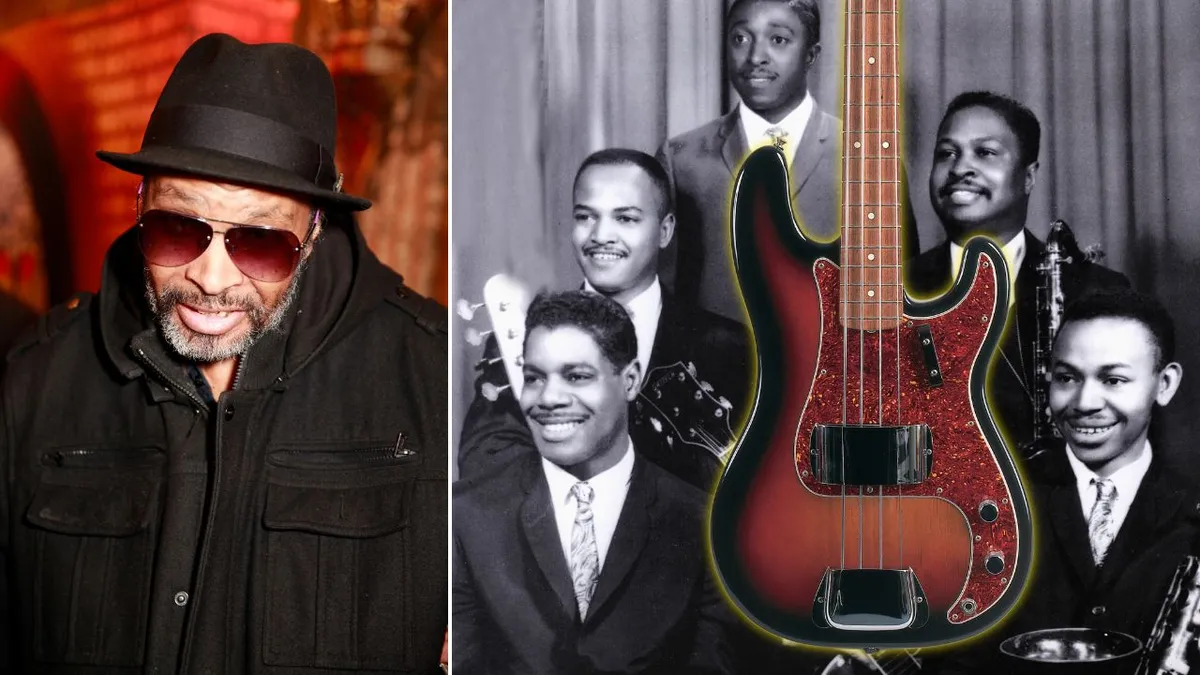
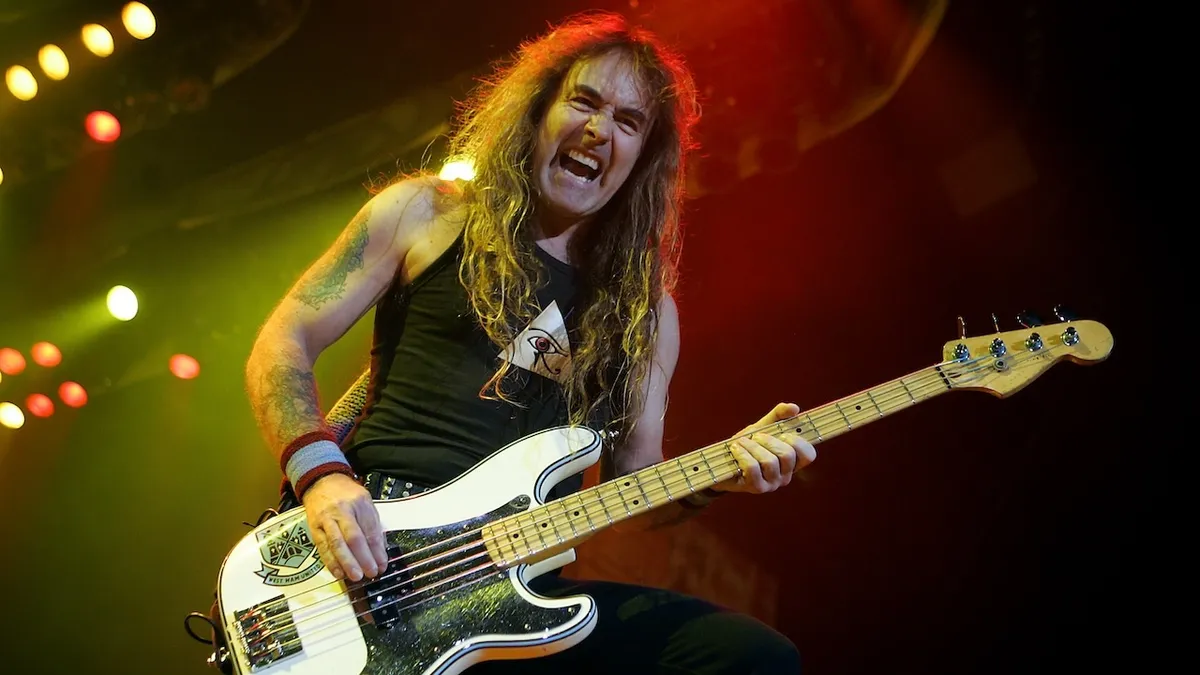
For a generation of bassists and R&B fans, those elements exist as a single thought. In the finale of Hathaway’s classic 1972 album, Weeks—playing a flatwound-strung ’62 P-Bass through an Ampeg SVT—takes a three-and-a-half-minute ride that is a seamless melding of groove, melody, and drama, making it one of the deepest bass solos on record. “Every bass player should own a copy of Donny Hathaway’s Live album,” blues bass maven Tommy Shannon told Bass Player in November ’97. “It’s just about perfection.”

Weeks deserves the renown the track has brought him, but in the past three decades his career has soared far beyond that moment of glory. In the studio he’s worked with a spectrum of pop, rock, R&B, blues, and country icons—artists such as George Harrison, the Rolling Stones, Stevie Wonder, Aretha Franklin, Michael McDonald, Wynonna Judd, and Vince Gill—and onstage he has backed Harrison, Judd, the Doobie Brothers, Lyle Lovett, and Gregg Allman. “I love playing in the studio and I love playing live,” the fiftysomething bassist says. “I just want to play music wherever I can.”

Born in Salemburg, North Carolina, Weeks grew up working in the fields and listening to country, pop, and R&B on the radio. At age 12 he started singing and then playing guitar in a gospel group—learning on a homemade axe strung with fishing line—and when the group began performing alongside big-time acts, he got his first glimpse of an electric bass. “It was a Fender Precision,” Weeks recalled in a May ’90 Guitar Player interview. “I said, ‘Man, that’s it!’”

At first playing a log-like Japanese bass, Weeks honed his bass skills in the early ’60s in a variety of bands and locations, from Alvin Cash & the Crawlers in Buffalo, New York, to Les Watson & the Panthers in Dallas, Texas. In St. Paul, Minnesota, it was the Fabulous Amazers and prog-rockers Gypsy, whose self-titled ’70 album with Weeks on bass has become a cult item. Willie found his ’62 P-Bass at a California pawnshop before heading to Chicago, where he played with a pre-Chaka Khan lineup of the band Rufus before joining up with soul star Hathaway. That gig would change Weeks’s life. “The band was such an incredible musical experience that I just couldn’t get into any music I played after that,” Weeks says. “Finally I said, ‘I’m just through with it.’ I went to Puerto Rico and hung out there for a year.”

It wasn’t the last time Weeks would take a hiatus and then re-emerge at a new level in his career. From Puerto Rico he traveled to New York and then London, where friend Andy Newmark was laying down drum tracks for future Rolling Stone Ron Wood’s ’74 solo debut, I’ve Got My Own Album to Do [Warner Bros.]. After laying tracks for Wood’s album, Weeks and Newmark went on to do sessions with Rod Stewart, the Rolling Stones, and George Harrison, playing on the former Beatle’s Apple LPs Dark Horse and Extra Texture and backing him on the ’74 Dark Horse tour.

In the late ’70s and early ’80s Weeks enjoyed a busy stateside studio career and played the Doobie Brothers’ ’82 farewell tour. The death of his wife, however, left him at another crossroads—this time with a young daughter to raise. “I drove to L.A. and started checking out apartments, and I was overwhelmed. I needed more of a family-oriented place. A buddy of mine said, “Why don’t you go to Nashville?” And I thought, Well, why not?

In 1984 Weeks moved to Nashville, where he worked his way onto the A-list of session players, logged steady roadwork with Wynnona Judd, and did a stint with Lyle Lovett. In the past two decades, Weeks’s sessions have leaned toward country but also have included blues, soul, and pop. This year he was guitarist John Scofield and drummer/producer Steve Jordan’s inspired choice for Sco’s Verve album That’s What I Say: John Scofield Plays the Music of Ray Charles. Employing reissue Fender Precision and Jazz Basses and a 1969 Ampeg Baby Bass electric upright, Weeks brings his typically imaginative lines, weighty tone, and inescapable grooves to classics such as “What’d I Say,” “I Don’t Need No Doctor,” and “I Can’t Stop Loving You.” The album is a fitting tribute not only to Charles but to Weeks, who—speaking from his new home back in North Carolina—sums up his career this way: “Over the years I just wanted to be inside the music—inside the groove.”

People around the world associate you with your break in “Voices Inside (Everything Is Everything).” What’s it like to be known for one solo?
[Laughs.] It’s incredible. Everywhere I go somebody knows my name. It’s not like with Michael Jackson—I don’t get mobbed—but I am famous, and I like it. It’s as incredible as that night Donny said, “On bass, ladies and gentlemen, the baddest bass player in the country—Willie Weeks, y’all!” I’m like, Oh, my God! What did he say? What am I going to do? I thought, I’d better build slow!

Was that solo edited for the album?
The only thing they did was make it shorter. There were other nights that the solo was sort of choppy—it didn’t really tell a story. The solo on the record was very, very simple, but it had a story. It was a little song.

You’ve lived a lot of different places and been in and out of music, but people always seem to find you. What do folks know they’re going to get when they hire you for a session?
They know they’re going to get a solid groove. It may be simple, but it will be melodic, it will be solid, and it will be a great sound.

How did you develop your groove?
It all started in church. Normally we didn’t have any instruments except tambourine, and it would be foot-stomp-clap, foot-stomp-clap [two-eighth-note/quarter-note rhythm]. That was a strong groove—all of us people together, clapping and stomping. That was the basis for it. And Donny Hathaway, man—his music was like an army coming at you, a groove so deep it would hypnotize you. That didn’t hurt as far as me developing.

You came up with great bass parts on the Ray Charles tribute CD. Did you draw any inspiration from the original bass lines?
Some of those bass lines you have to agree with, like “Hit the Road Jack”—you got to stay with that! But most things we worked out as we went along.

How did you decide to use the Baby Bass on the record?
I just asked, “Do we want to utilize this thing at all, and they were, “Yeah! Bring it on over!” It’s a fun thing, a great, unique sound. I used the Baby Bass on “What’d I Say” and “You Don’t Know Me.”

On your Fender tracks it sounds like you were using flatwounds.
I’m sure most of it was with [La Bella] flats—we were doing Ray Charles, man! If you’re gonna do Old School, you’ve got to put some flats on there. That’s what they did back then, and it sounded incredible.

Did you do any EQing on your bass?
I turned it up, and that’s it—these days I like the stock Fender sound. I said to Joe [Ferla, engineer], “Man, why does it sound so good?” And he said, “I’m just basically letting the instrument speak.” [See Tone Is Everything, page 33.]

What’s your general approach to sessions?
When I go in I want to be very positive and very open and energetic. When I get ready to play, I try to open myself and be affected by the music. I try to let it all come through me and happen naturally. That’s how I do what I do.

When you moved to Nashville you had to get into the country bass style. Was that a challenge?
I had to think about it a little. I did one country session where I was actually let go. I called the producer later and said, “Please just tell me why I was let go.” He said, “Well, it just wasn’t jelling.” [Laughs.] That’s about all I could get out of him. I immediately went out and bought some country records that had bass players who were doing a lot of Nashville sessions, just so I could see how it works. What clicked for me was: not busy, but very solid. If you do some sort of movement, you have to make sure you don’t bring a lot of attention to yourself—make sure it doesn’t disturb the groove and conflict with the lyrics.

What was your breakthrough in Nashville?
Vince Gill hired me to do his record When I Call Your Name [MCA], and it was magic. It got me started, and I felt like my studying paid off. I went in with a positive attitude and let myself be open to the music, keeping in mind what I had checked out on those records. It all fell into place.

In R&B you have a certain amount of freedom within the groove. Was it hard to hold back when you were playing country styles?
I remember one producer saying, “Well, it sounds a little bit happy.” [Laughs.] I have a lot of fun playing, and sometimes the music feels so good that you just want to bounce that baby. So I had to learn how to bounce in my mind but stay focused on the simplicity of the music. Nobody had any idea what I’d be thinking about when I was playing. Sometimes I’d just be sitting there laughing at myself, thinking, Okay, Willie, don’t go off—just stay steady here!

Nashville bassists talk about getting called to replace a track just because the producer didn’t like a player’s tone. Did you learn a lot about tone when you were getting your Nashville chops together?
Absolutely. I used to go into sessions with different kinds of basses, just trying out stuff, and the sound I was getting was pitiful. I thought, Why can’t this sound good? It’s just bass! So I started searching for a bass that had a good, solid, simple sound, and I ended up with Fender. The only time I drifted away from Fender was when I was with Wynonna. We were playing in keys like Eb—something that didn’t bother James Jamerson a bit; he would make the coolest things out of odd keys—so I started using different 5-strings: a Yamaha, a James Tyler, a Tobias Killer B, a Sadowsky.

You’ve done a lot of touring in addition to your session work. Do you have a different mindset for live shows than for doing sessions?
Basically it’s the same: I want to play the music better than I played it the last time—I want to play this music great. I just think, I don’t know whether I’ll ever play this again, so I want to just kill it! [Laughs.] Every chance I get.

What was it like touring with George Harrison?
It was top shelf—great band, great airplane, great food every night after the show, great hotels. But if I could do that all over again I would be way more serious about the music. I don’t think we pulled it off as well as we could have—as well as we should have. A lack of maturity played a part in that.

George was great to us. While dealing with voice problems and the media and all, he still kept an upbeat attitude. I don’t know how much he enjoyed being the leader, but he was a pro throughout the tour. I’ll always cherish that.

How did you end up recording on the Rolling Stones’ “It’s Only Rock ’n’ Roll (But I Like It)” [It’s Only Rock ’n’ Roll, Virgin]?
It came about through Keith Richards. He was hanging out with Ronnie [Wood] when we were recording Ronnie’s record, and Keith said, “We’ve got this track, man, and we’d like for you to put some bass on it.” And I said, “Yeah, of course.” Andy Newmark and I drove out to Mick Jagger’s place, which ended up being a castle. After we got there, we sat around waiting for an hour, and I finally said, “Hey man, are we going to do this?” Within five minutes we were doing it. They had a mobile studio set up in the back, and I listened to the tune and picked up my bass and started playing. It was funny—Mick was standing in front of me and it was like he was directing me, but he was dancing! [Laughs.] It was amazing, man. I’m standing there playing and listening to the music and looking at him and just feeling ... pretty magical.

You also played on a Stevie Wonder tune, “He’s Misstra Know-It-All” [Innervisions, Motown]. What was that like?
The record was done, and they had one track left. I arrived in the studio before Stevie did, and they put the track up and I started playing to it. He walked in and was like, “Yeah!,” and he’s groovin’ and goin’ on—it was great. He made only one change. When it got to the end of the verse I was playing the changes, but he said, “How about pedaling on the I chord? I did that and we were done.

There have been a lot of changes in studios since you started playing, especially with the advent of programs like Pro Tools. How has that affected you?
It doesn’t really affect what I do, although I miss having more live sessions, getting into a room with other musicians and creating stuff. But most of the time when I do an overdub, they’ve worked with it until they’ve got it feeling good, so I don’t have to go through and fine-tune the groove.

I had a situation where a guy took my bass line from one part and put it in another part because he liked it so much. I said, “Okay, if that’s what you want.” As long as it doesn’t sound bad, it’s fine.

You’ve gotten disillusioned with the music business a few times in your career, such as after you left Donny Hathaway’s band. How did you overcome that discouragement?
I would try to hear some music that inspired me, like Motown and James Jamerson. And there have been times when I just picked up my instrument and tried to learn something different. If you find something that inspires you to learn, it lights the fire.


Leave a Comment
Name:
Location:
Average Rating :
 

The Sony ACID Pro 5 Giveaway

The Audio-Technica Get Heard Giveaway.

The Camel Audio Complete Camel Giveaway

The sE Electronics Microphone Contest

The Image Line Software Make Me Famous Giveaway


Favorite part of Bass Player LIVE?
 
Subscribe Live Bookmarks Advertise Contact Us Privacy Policy Terms & Conditions


Bass Player is a trademark of New Bay Media, LLC. All material published on www.bassplayer.com is copyrighted @2009 by New Bay Media, LLC. All rights reserved